
Wildlife Removal Services
Mole Removal in Northern Virginia
Ridges winding across the lawn and fresh soil mounds every morning. Moles never get into the house — but left alone they will work a yard for years, and almost everything sold to stop them does nothing.
Licensed in VA (#56104) and MD (#049372). Family-owned, 20+ years, answering 24 hours a day.
Moles or Voles? The Answer Changes the Whole Job
This is the one diagnosis worth getting right before anyone treats your yard, because the two animals are unrelated and nothing that works on one works on the other.
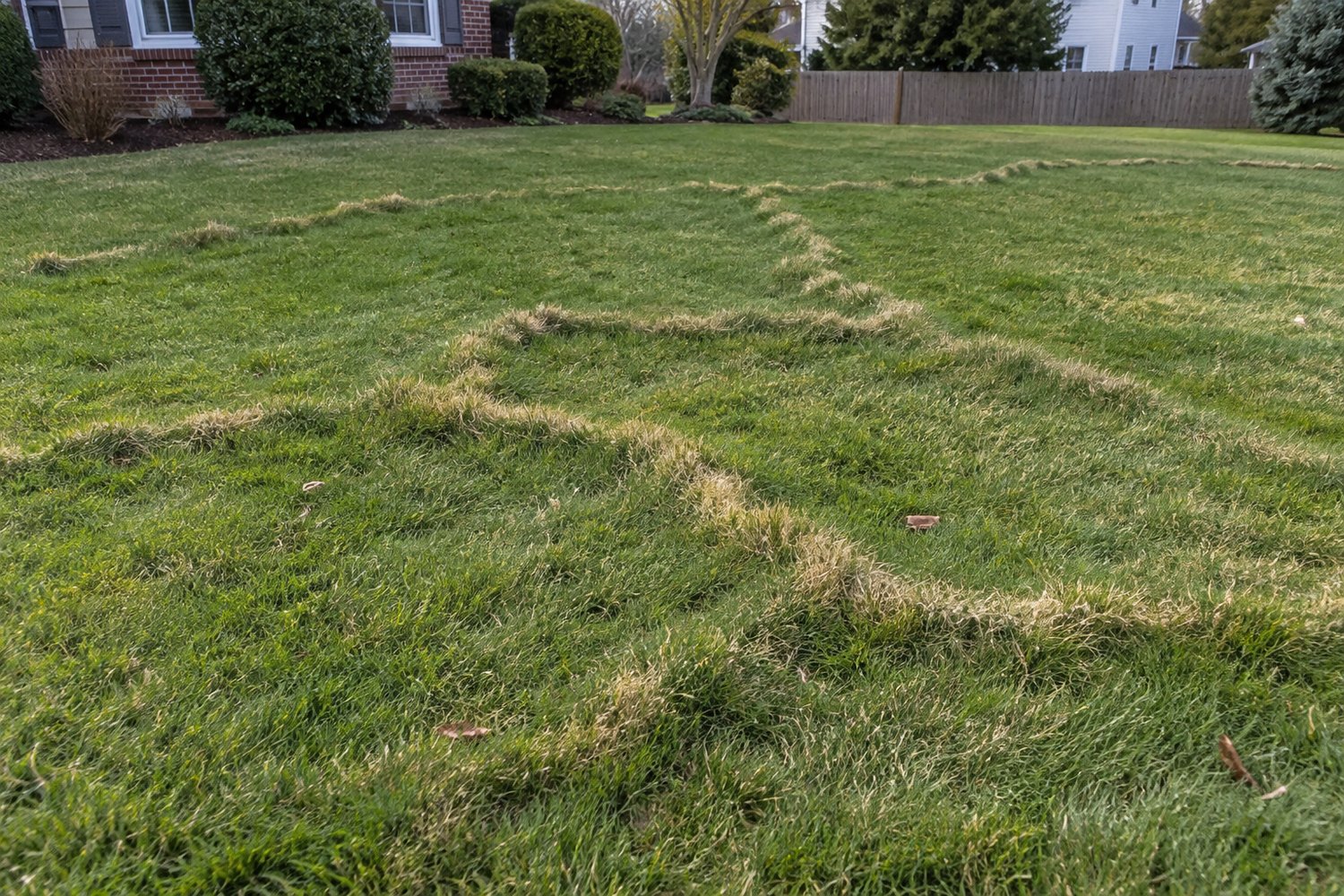
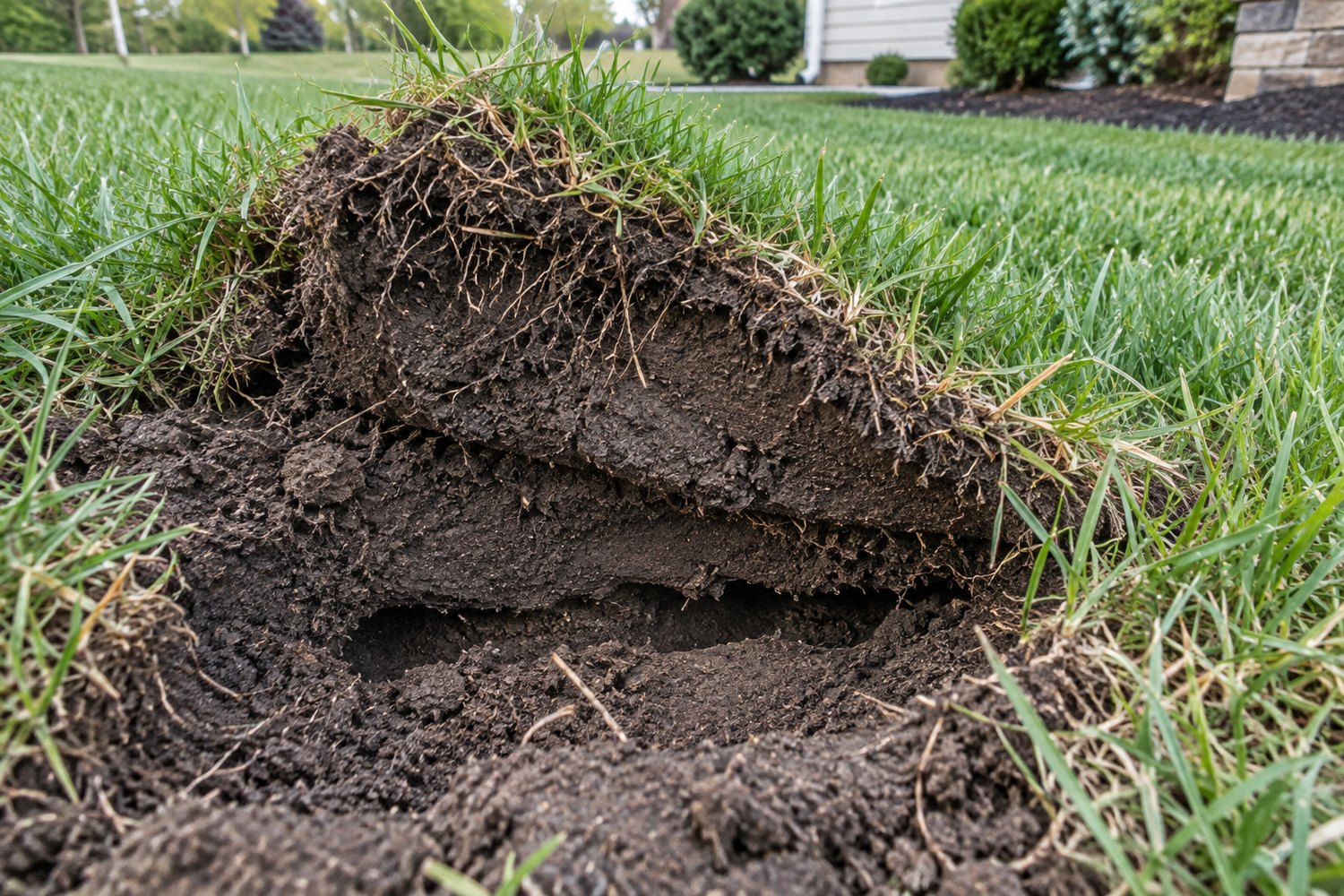
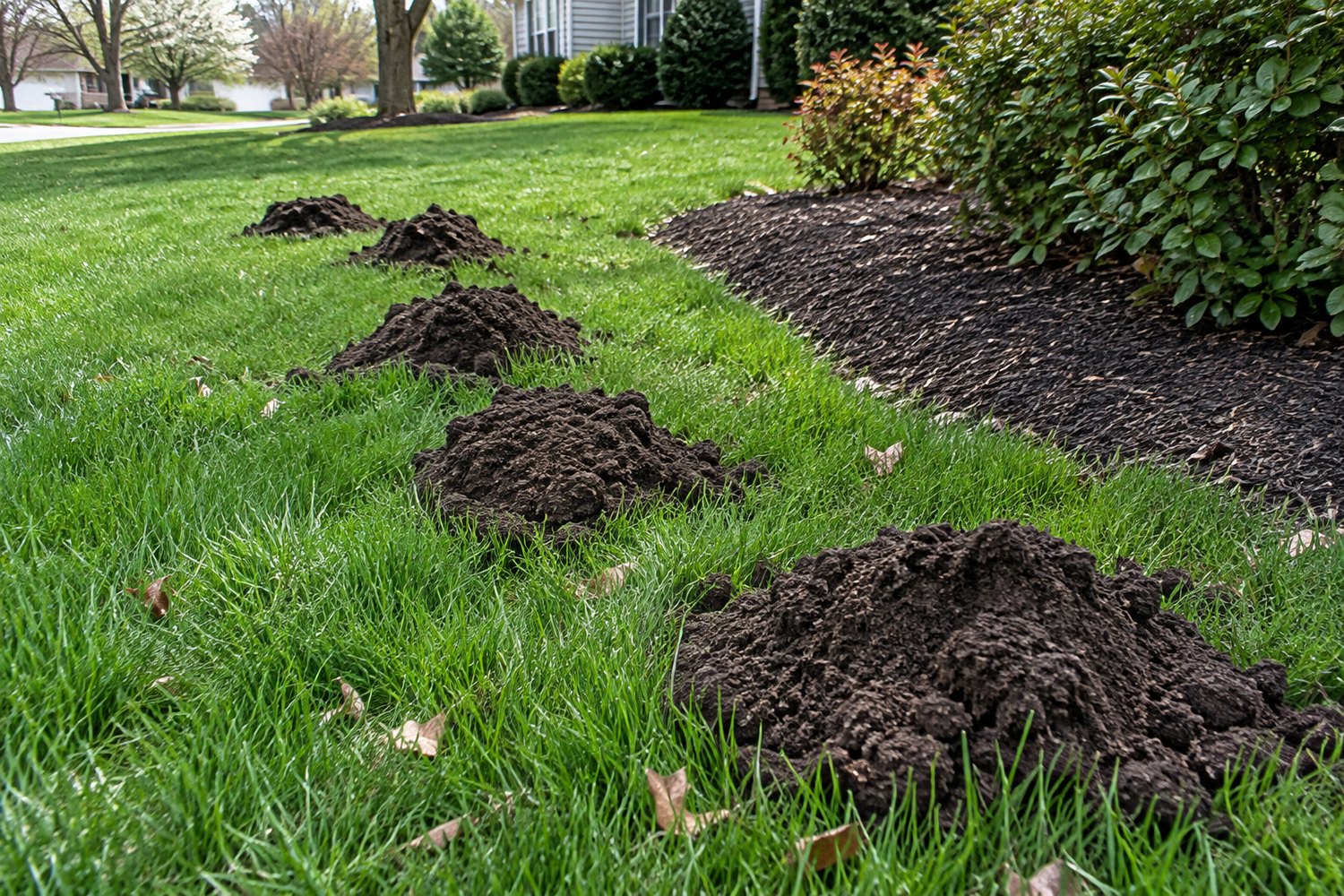
A mole is an insectivore — it is not a rodent and it does not eat plants. It is after earthworms and grubs, and it lives almost entirely underground. Its signature is raised tunnel ridges you can feel give way underfoot, and conical mounds of loose soil pushed up from deeper runs. Damage is structural to the turf: roots lifted away from soil, so the grass along the ridge yellows.
A vole is a rodent, and it does eat plants. It leaves surface runways — narrow flattened paths of clipped grass at ground level, no mounds — along with gnawed bark at the base of shrubs and hollowed-out bulbs and hosta crowns. If your plants are being eaten, you have voles. If your lawn is being lifted, you have moles.
Why Grub Killers and Repellents Keep Failing
The standard advice is to kill the grubs and the moles will leave. It rarely works, for a simple reason: earthworms, not grubs, are the bulk of an eastern mole’s diet. Clear the grubs out of a yard full of worms and the mole carries on undisturbed — and you have put an insecticide down for nothing.
The rest of the shelf is no better. Castor oil granules push activity from one part of the yard to another for a while. Ultrasonic stakes, windmills and gas cartridges have no consistent effect in an open tunnel system that may run a hundred feet or more.
What actually resolves a mole problem is trapping in an active run, which means first proving which runs are active rather than guessing. Most tunnels you can see are exploratory and never used again.
One Yard, One Or Two Animals — Not a Colony
The scale of the damage badly misleads people. An eastern mole is solitary and territorial, and a single animal can work a hundred feet of new tunnel in a day and hold a territory of an acre or more. A lawn that looks overrun is usually one mole, occasionally two.
That is good news for the fix: resolve the resident animal and the yard is quiet. It is also why neighbours matter — tunnels do not stop at a property line, and a yard that has been cleared can be re-entered from next door the following season. We will tell you honestly when that is the likely pattern, rather than sell you a guarantee the biology does not support.
How the Job Runs
1. Find the active runs
We walk the lawn, map the ridges and mounds, and test which runs are actually in use rather than treating every tunnel you can see.
2. Trap in the run
Traps are set directly in active runs, sited and depth-set to the tunnel, then checked and repositioned until the yard goes quiet.
3. Settle the turf
Ridges rolled back down and mounds knocked out and spread, so the lawn recovers instead of leaving you a season of bare patches.
Why Homeowners Call BEDR
- 20+ years, family-owned — you deal with the people doing the work.
- Licensed in Virginia (#56104) and Maryland (#049372).
- Humane and legal methods — we work inside Virginia’s relocation and protected-species rules, not around them.
- We seal, not just trap — the reason customers do not call us back about the same animal.
- 24/7 answering, with same-day service across Northern Virginia.
- Full restoration in-house — attic cleanup, insulation, chimney caps, crawl space work.
Humane Solutions. Lasting Results.
Frequently Asked Questions
Will moles get into my house?
No. Moles are built for soil and stay in it — this is a lawn and garden problem, not a structure problem. If something is in your crawl space or walls, it is a different animal and we would look at it differently.
How long does mole control take?
Usually one to three weeks, with a few visits. The work is not one dramatic day — it is finding active runs, setting into them and adjusting, because a trap in the wrong tunnel catches nothing no matter how long it sits.
Do grub treatments get rid of moles?
Generally not. Earthworms make up most of an eastern mole’s diet, so removing grubs takes away only part of the food supply. It is a fine lawn-care decision on its own merits, but it is not mole control.
Will they come back?
The resident animal will not. Another can move in from an adjoining yard in a later season, because tunnel systems cross property lines. That is honest biology rather than a warranty problem, and a check the following spring is usually all it takes.
Can you repair the lawn damage?
We settle the ridges and spread the mounds as part of the job so the turf can knit back together. Reseeding a badly chewed-up lawn is landscaping work, and we will tell you plainly when that is what is needed.
Get the Moles Out and the Lawn Settled
Stop buying granules that do not work. We answer 24 hours a day.
Other Wildlife Removal Services
Squirrel Removal · Raccoon Removal · Bat Removal · Bird Nest Removal · Snake Removal · Groundhog Removal · Skunk Removal · Fox Removal · Opossum Removal
Where We Work
Fairfax · Alexandria · Arlington · McLean · Vienna · Reston · Herndon · Falls Church · Woodbridge · Fredericksburg · Chantilly · Centreville · King George