
Serving Ashburn, Virginia
Wildlife Removal in Ashburn, VA
Ashburn has some of the newest housing in Northern Virginia, and we still pull raccoons, squirrels and bats out of Ashburn attics every week. A newer house is not a sealed house — it just fails in different places. We find the opening, get the animal out and close the house properly.
Licensed in VA (#56104) and MD (#049372). Family-owned, 20+ years, answering 24 hours a day.
Why Ashburn Homes Get Wildlife Problems
We run calls across the whole of Ashburn — Ashburn Village, Ashburn Farm, Brambleton, Broadlands, Belmont, Moorefield and One Loudoun — and the pattern here is different from anywhere else we work.
Ashburn was farmland inside living memory. The decision that changed it came in 1985, when Loudoun County approved Ashburn Village, a planned community of roughly 5,000 homes, and the rest of the area followed. County planning documents put it plainly: about ninety-four percent of the housing in the Ashburn community has been built since 1990. So almost every house we visit here is somewhere between five and thirty-five years old.
That produces two things at once. The first is a homeowner who has never had a reason to look at their roofline, because the house still feels new. The second is a building stock now hitting the age at which the cheapest parts of it give out — and they all give out at roughly the same time, because they were installed at roughly the same time.
The bigger factor, though, is the design of the communities themselves. Ashburn was not built as streets and lots. It was built as neighborhoods with amenities: stormwater ponds, wooded buffer strips, trail corridors, common parcels left unmown along Goose Creek, Broad Run and Beaverdam Run, and the W&OD trail running right through. Those green spaces are permanent, protected and threaded between the houses. Raccoons, groundhogs, foxes and skunks do not merely pass through Ashburn — they live in it, year round, fifty feet from a back deck, with water and cover and no pressure on them at all. When one of them needs a dry, warm place to raise young in February, your attic is the nearest option.
The Animals We Remove in Ashburn
Raccoons — pond and buffer animals that end up in attics
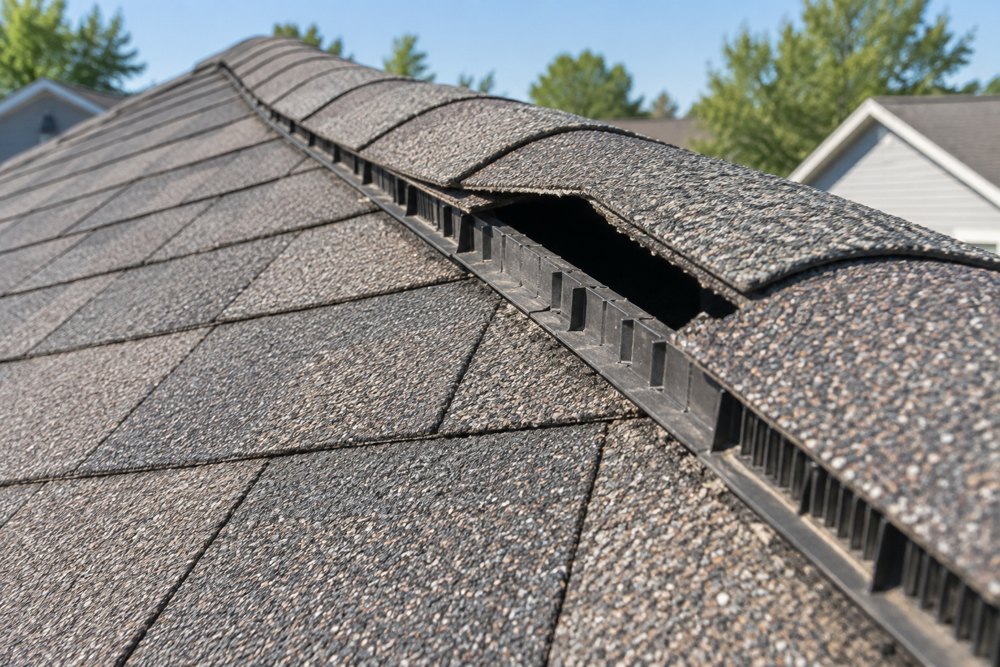
Ashburn’s ponds and stream buffers support a heavy raccoon population, and a female looking for a den site in late winter will take a roof over a hollow tree every time. The usual entries on a newer Ashburn house are the end of a ridge vent, the roof-to-wall kickout where a two-story section meets a lower roof, and the soffit over an attached garage. Raccoons can carry rabies, and a mother with kits above a bedroom ceiling is not a do-it-yourself job. We remove the adult and any young by hand, then close the opening in metal.
Eastern gray squirrels — the highest-volume call
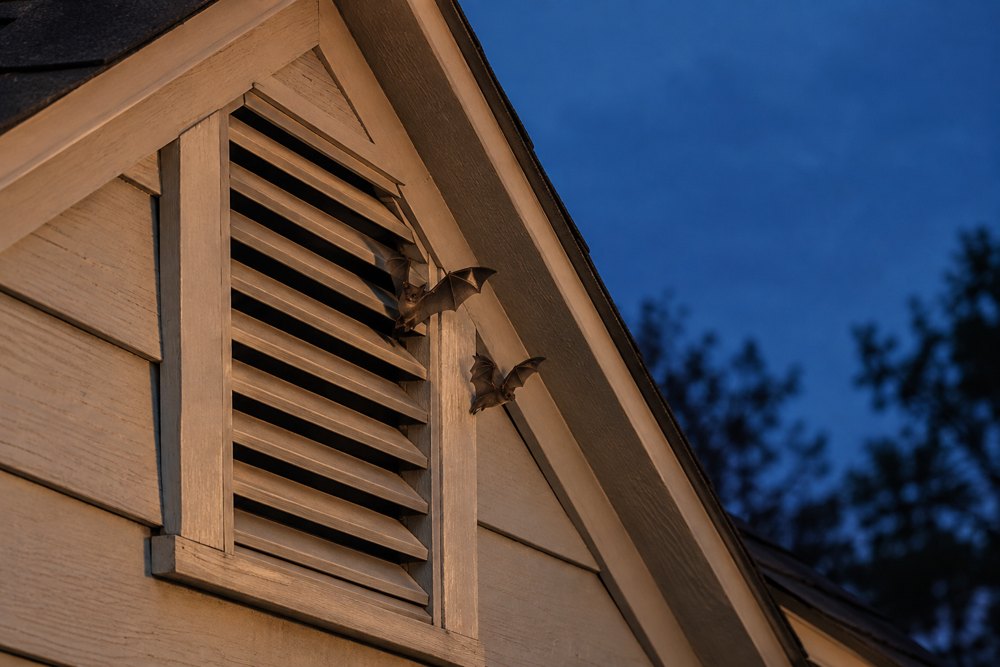
A squirrel needs about an inch and a half. On a 1995–2010 house it finds that at a gable louver with no screen behind it, at a chewed corner of vinyl-wrapped trim, or where the fascia meets the gutter return. Then they chew, and chewed wiring in a blown-insulation attic is a genuine fire risk. They breed twice a year, in late winter and again in late summer, so one animal in February is a family by March.
Bats — a real Ashburn problem, and the one to get right first time
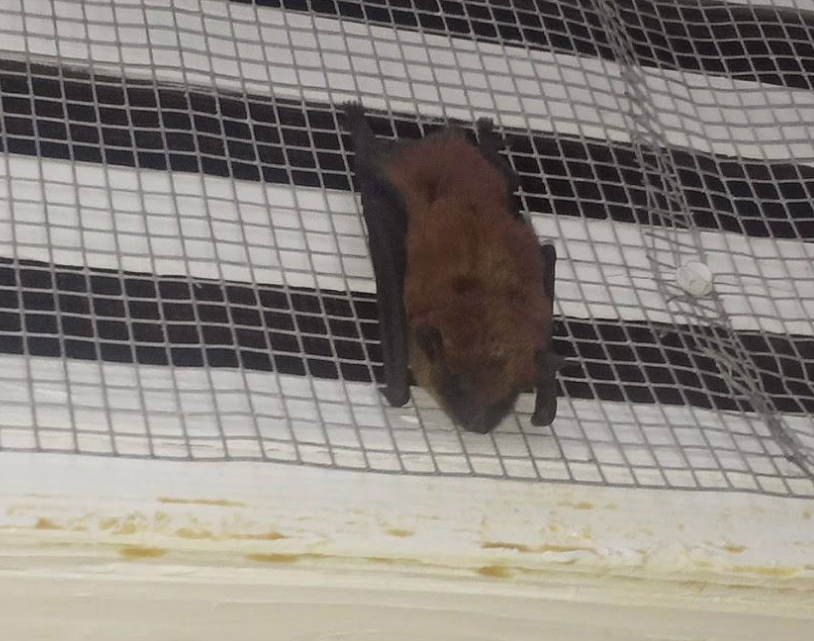
Big brown bats need a quarter-inch gap. Ridge vent ends, gable louvers and the seam where two roof planes meet all supply that on newer construction as readily as on old. Bats cannot be trapped or poisoned; the only method that works is exclusion — one-way devices that let them out and not back in, then sealing every gap above a quarter inch. Timing matters: from roughly May through August there are flightless pups in the roost, and sealing then traps them inside the wall. During those months we fit devices and complete the seal once the young can fly.
Also common in Ashburn: groundhogs burrowing under sheds, decks and the retaining walls around pond edges · skunks and opossums under stoops and screened porches · foxes denning in buffer strips and under decks in spring · birds nesting in dryer and bath vents on townhouse rear walls · black rat snakes along the creek corridors · and dead-animal recovery inside walls and soffits.
How an Ashburn Job Actually Runs
1. Inspection
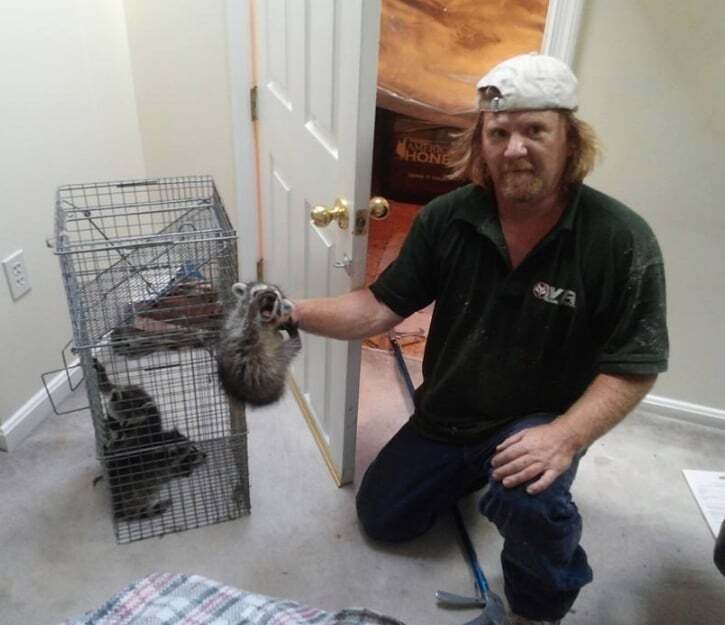
We walk the roofline, soffits, vents, chimney and foundation, then go into the attic or crawl space to find entry points, nesting sites and damage. You get photos of what we find.
2. Humane Removal
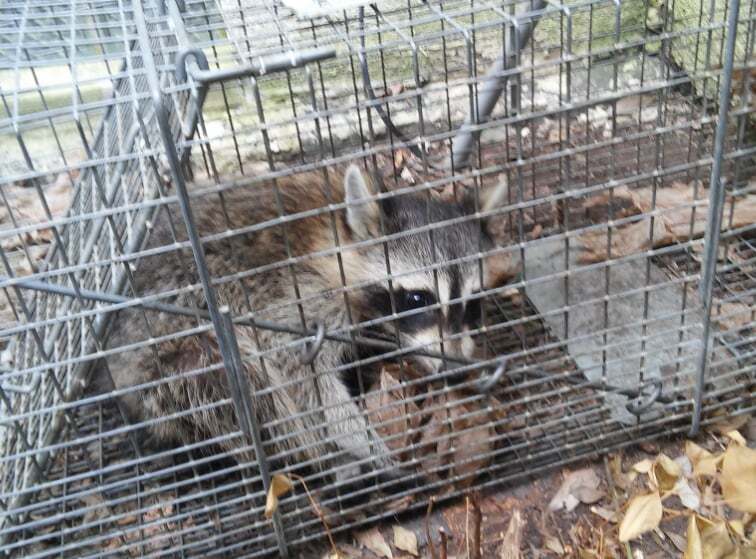
Species-appropriate and humane: trapping and hand-removal for squirrels and raccoons including young, one-way exclusion for bats, targeted work for groundhogs, skunks and snakes.
3. Exclusion
Every entry point sealed in steel mesh, heavy-gauge metal flashing or hardware cloth. Not foam, not caulk — a squirrel chews through both in an afternoon.
Why Ashburn Homeowners Call Us Instead of a Pest Company
- 20+ years, family-owned — you deal with the people doing the work.
- Licensed in Virginia (#56104) and Maryland (#049372).
- Humane methods — we get the animal out without harming it, and we tell you straight what we found.
- We seal, not just trap — the reason customers do not call us back about the same animal.
- 24/7 answering, with same-day service across Ashburn.
- Full restoration in-house — attic cleanup, insulation, chimney caps, crawl space work.
Humane Solutions. Lasting Results.
Ashburn Wildlife Removal FAQs
How fast can you get to my Ashburn home?
Same day in most cases, and we answer 24 hours a day. An animal in a living space, a bat in a bedroom, or a rabies-vector animal gets priority.
My house is only fifteen years old. How is something getting in?
This is the most common question we get in Ashburn, and the answer is that age is not what lets animals in — details are. Unscreened gable louvers, open ridge-vent ends, the kickout where a two-story wall meets a lower roof, and garage soffits are standard on houses built here in the last thirty years. They are openings on day one. Nothing has to rot first.
We back onto a pond and a trail. Is that why this keeps happening?
It is a large part of it. Those buffers and ponds were designed into the community and are not going anywhere, which means a resident raccoon, groundhog or fox population lives permanently within yards of your house. We cannot change that, and we would not want to. What we can do is make your building the one house on the street they cannot get into.
Do you handle HOA and townhouse properties?
Yes. Most of Ashburn sits under an HOA, and on attached homes a seal that stops at the property line does not hold — the attic and soffit runs are usually shared. We will tell you honestly when your neighbour or the association needs to be involved, and document what we found so you can take it to them.
Will you just trap it and take it away?
Removal on its own is a temporary fix. An opening that let one animal in will let the next one in, usually within days. Every job we do ends with the entry points sealed in metal — that is the part that actually finishes it.
Get Your Ashburn Home Sealed
Scratching overhead, droppings under a vent or a smell in a wall will not resolve on its own — and the repair bill grows every week it runs.