
Wildlife Removal Services
Bird Nest Removal in Northern Virginia
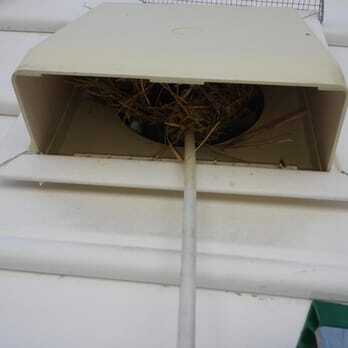
A bird nest in a dryer vent is not a wildlife problem so much as a fire and moisture problem that happens to have birds in it. Blocked exhaust, chirping in the bathroom fan, droppings down the siding — all of it starts with one vent hood that no longer closes.
Licensed in VA (#56104) and MD (#049372). Family-owned, 20+ years, answering 24 hours a day.
Where Birds Actually Nest on a Virginia House
Almost every bird job we run in Northern Virginia is in one of five places, and none of them is a tree:
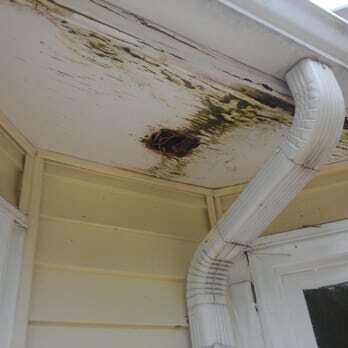
Dryer vents. The damper flap props open, straw and twigs go in, and the run packs solid. Bathroom and kitchen exhaust vents. Same mechanism, and you hear it through the ceiling. Soffit returns and gable louvers. Sparrows and starlings get behind the screen and nest in the void. Porch soffits, columns and light fixtures. Messy rather than dangerous. Dedicated fan vents on the roof. Hardest to reach, most often missed.
The signs are easy to read once you know them: chirping behind a wall or ceiling in the early morning, a dryer that takes two or three cycles to dry a load, a vent hood with straw hanging out of it, streaking and droppings down the siding below a vent, and the same bird flying to the same point on the house over and over with material in its beak.
Why a Blocked Vent Is the Part That Actually Matters
A packed dryer vent is a documented house-fire cause. Lint is fuel, the nest is fuel, and the blockage keeps the heat in the run instead of outside. Long before it gets that far you are paying for it in longer dry cycles, a hotter laundry room and a dryer working against a closed pipe.
Bathroom and kitchen vents fail differently. A blocked bath fan dumps humid air into the joist bay or attic instead of outdoors, and that shows up months later as mould on the sheathing and stained drywall around the fan. A blocked kitchen vent leaves grease in the run.
Then there is what nesting leaves behind: droppings, feathers, and the mites that live in an abandoned nest and move indoors looking for a host after the birds fledge. Clearing the nest without cleaning the cavity and closing the opening buys you one season at most, because the same vent will be found again next spring.
With Birds, the Timing Is Everything
Under U.S. That is not a technicality we hide behind; it decides the schedule.
Three of the birds that nest on houses are not native and are not protected: the house sparrow, the European starling and the feral pigeon. Between them they account for most of the vent nests we clear, which is why identification is the first thing we do rather than the last.
So the honest answer on a spring call is one of two things. If the nest is unoccupied or the species is unprotected, we clear it and close the opening the same visit. Nesting season in Virginia runs roughly March through August, and the work is easiest either side of it.
How the Job Runs
1. Identify and inspect
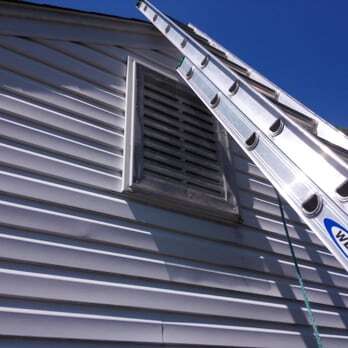
We find every nest on the house — vents, soffits, louvers, fixtures — identify the species, and tell you plainly whether it is protected and what that means for timing.
2. Clear and clean
Nest and debris pulled out, the vent run cleared end to end, the cavity cleaned and treated for mites, and the exhaust airflow checked before we call it done.
3. Guard the opening
Metal vent guards with working dampers, screened louvers and sealed soffit returns. The vent still exhausts; the bird cannot get back in.

Why Homeowners Call BEDR
- 20+ years, family-owned — you deal with the people doing the work.
- Licensed in Virginia (#56104) and Maryland (#049372).
- Humane and legal methods — we work inside Virginia’s relocation and protected-species rules, not around them.
- We seal, not just trap — the reason customers do not call us back about the same animal.
- 24/7 answering, with same-day service across Northern Virginia.
- Full restoration in-house — attic cleanup, insulation, chimney caps, crawl space work.
Humane Solutions. Lasting Results.
Frequently Asked Questions
There is chirping in my bathroom fan. Can you get it out today?
Usually yes — we answer 24 hours a day and most vent jobs are a single visit.
Is a bird nest in the dryer vent really a fire risk?
Yes. Nesting material plus lint in a blocked run is exactly the condition dryer-fire warnings are written about. It is also why we clear the whole run rather than just the hood you can see.
Can I just pull the nest out myself?
You can reach a vent hood, but you cannot tell from the ground whether the species is protected or whether the run is clear behind the hood, and an abandoned nest is full of mites. The part that actually stops the problem — a guarded vent with a working damper — is the part homeowners usually skip.
Will the birds come back next year?
To an open vent, yes, and often the same pair. To a guarded one, no. Birds return to a location, not to a nest, which is why closing the opening is the entire job.
Do you handle pigeons and roosting on ledges?
Yes — pigeons and starlings are unprotected, and ledge roosting is handled with exclusion and deterrents rather than nest removal. We do not do insects or mice.
Get the Nest Out and the Vent Guarded
One visit clears the nest, the run and the reason it happened. We answer 24 hours a day.
Other Wildlife Removal Services
Squirrel Removal · Raccoon Removal · Bat Removal · Snake Removal · Groundhog Removal · Skunk Removal · Fox Removal · Opossum Removal · Mole Removal
Where We Work
Fairfax · Alexandria · Arlington · McLean · Vienna · Reston · Herndon · Falls Church · Woodbridge · Fredericksburg · Chantilly · Centreville · King George