
Serving Chantilly, Virginia
Wildlife Removal in Chantilly, VA
Chantilly is still being built, and every time another field goes under construction the animals living in it move into the nearest neighborhood. We remove them and seal the house so the next wave cannot get in.
Licensed in VA (#56104) and MD (#049372). Family-owned, 20+ years, answering 24 hours a day.
Why Chantilly Homes Get Wildlife Problems
We cover Chantilly and the areas around it — Poplar Tree, Greenbriar, Franklin Farm, Brookfield, Rocky Run and the Westfields corridor, plus the streets off Route 50, Route 28 and Stringfellow Road.
This was farmland inside living memory. Sully, the house Richard Bland Lee built in 1794, still stands beside the airport; the Walney farm next door stayed in private hands until the 1970s and is now Ellanor C. Lawrence Park. Dulles opened in 1962, Route 28 became a technology corridor, and the fields went to subdivisions, office parks and now data centers — a process that has not finished.
That is the thing that makes Chantilly different from an established suburb: wildlife here is constantly being displaced rather than settled. When a wooded parcel off Route 28 is cleared, the raccoons, groundhogs, skunks and foxes that lived on it do not disappear. They move a few hundred yards into the nearest neighborhood and look for the same things they had before — a dry cavity, a dark space under something, a reliable food source. A lot of our Chantilly calls arrive within a season of clearing work nearby, and they come in clusters.
People assume newer houses are safe. They are not, they just fail differently. Chantilly’s stock is mostly 1985 to 2005, so instead of rotted wood you get builder details: unscreened gable louvers, ridge vents that were never fully sealed at the ends, the kickout where a roof meets a two-story wall, the soffit run over an attached garage, and the gap behind aluminum-wrapped trim. An inch and a half is all a squirrel needs, and a quarter inch is enough for a bat. The outer subdivisions back straight onto Cub Run, Flatlick Branch and Ellanor C. Lawrence Park, so there is no shortage of animals arriving at the tree line.
The Animals We Remove in Chantilly
Raccoons — the displaced-and-looking-for-a-den call
A raccoon pushed out of a cleared parcel wants a dry, defensible cavity, and an attic or an uncapped chimney flue is a better den than anything the woods offered. A 15–25 pound animal can work open a weak roof edge or a loose gable louver. Inside you get flattened insulation, torn ductwork and a latrine that eventually stains through the ceiling. Raccoons can carry rabies, so this is not a job to handle yourself — do not try to move one yourself.
Groundhogs and skunks — the field-edge animals
Both are digging animals and both love the transition between open ground and structures, which describes most of Chantilly. Skunks take the void under a concrete stoop, porch slab or deck, and a skunk job is really about not getting sprayed — that is technique, not luck.
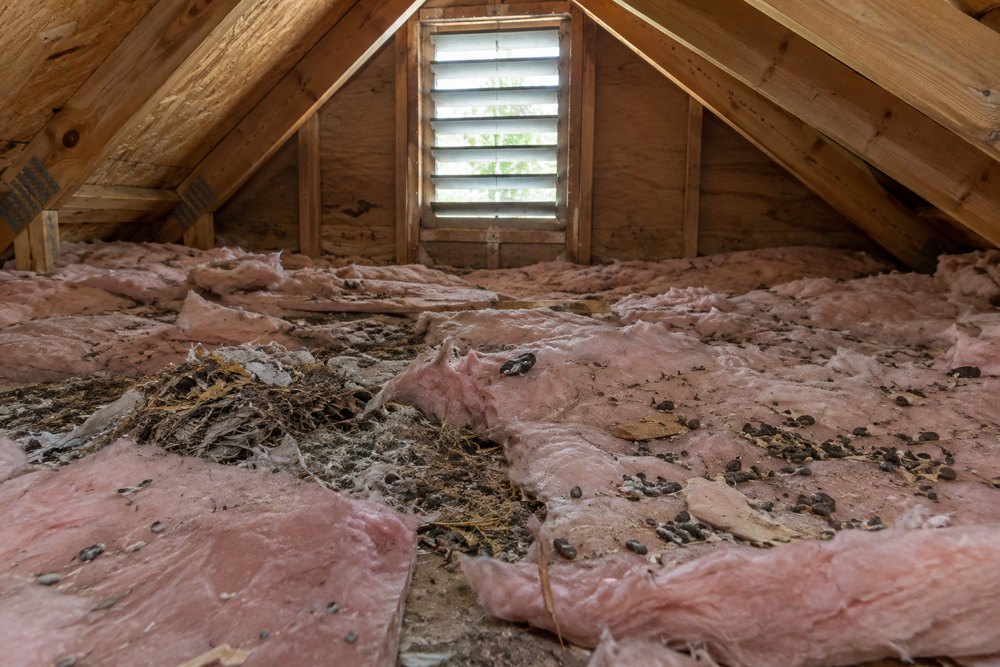
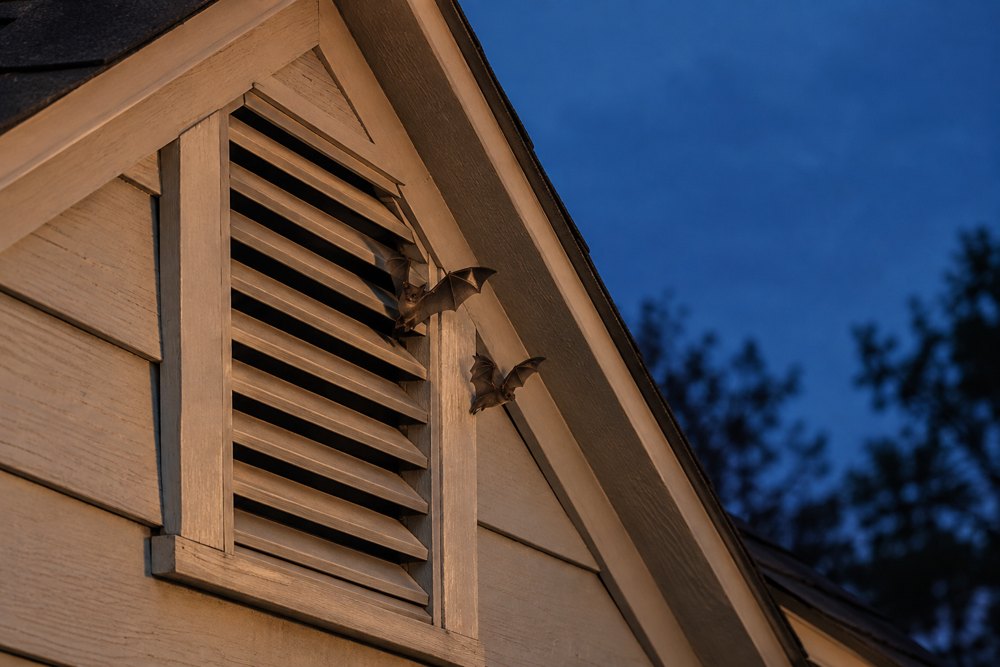
Squirrels and bats — the roofline animals
Gray squirrels find the builder gaps described above, then chew constantly once inside, wiring included, which is a genuine fire risk in a blown-insulation attic. They breed twice a year, February to April and August to September.
Bats need only a quarter-inch gap, and on 1990s construction that is usually a ridge vent end or a gable louver. They cannot be trapped or poisoned. Exclusion is the only method that actually works: one-way devices that let them out and not back in, then sealing everything over a quarter inch. Timing matters. Roughly May through August there are flightless pups in the roost, and sealing then shuts them inside your wall. In those months we fit devices and finish the seal once the young can fly.
Also common in Chantilly: foxes denning under sheds and decks, often a spring problem that ends by itself if the den is sealed after they leave · opossums in garages and dead in wall voids · birds nesting in dryer and bath vents · black rat snakes along the stream valleys · and dead-animal recovery, which is its own job inside a finished wall.
How a Chantilly Job Actually Runs
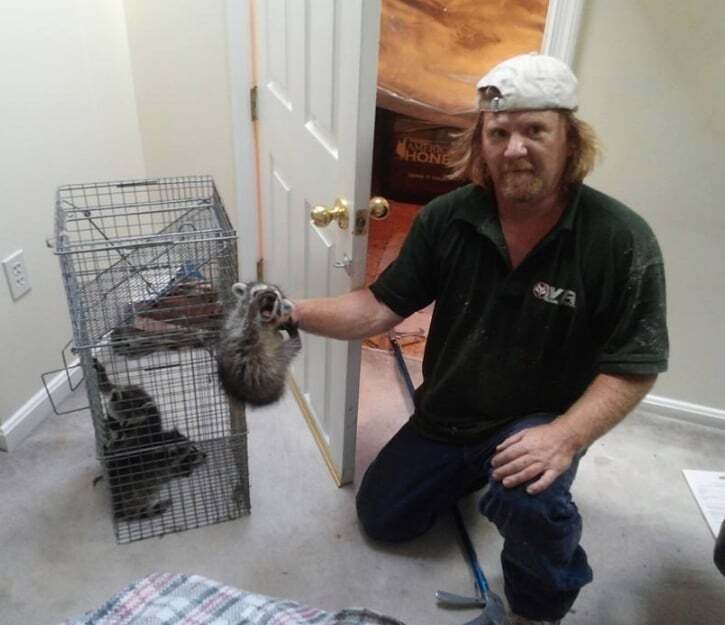
1. Inspection
We walk the roofline, soffits, vents, chimney and foundation, then go into the attic or crawl space to find entry points, nesting sites and damage. You get photos of what we find.
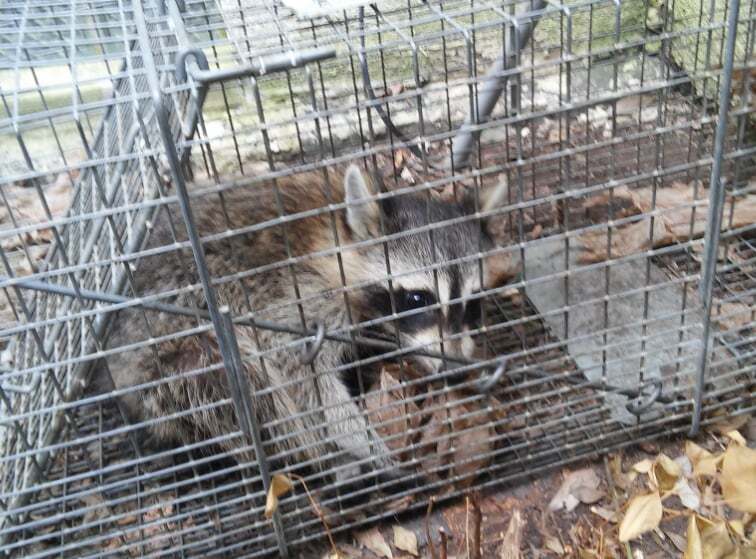
2. Humane Removal
Species-appropriate and humane: trapping and hand-removal for squirrels and raccoons including young, one-way exclusion for bats, targeted work for groundhogs, skunks and snakes.
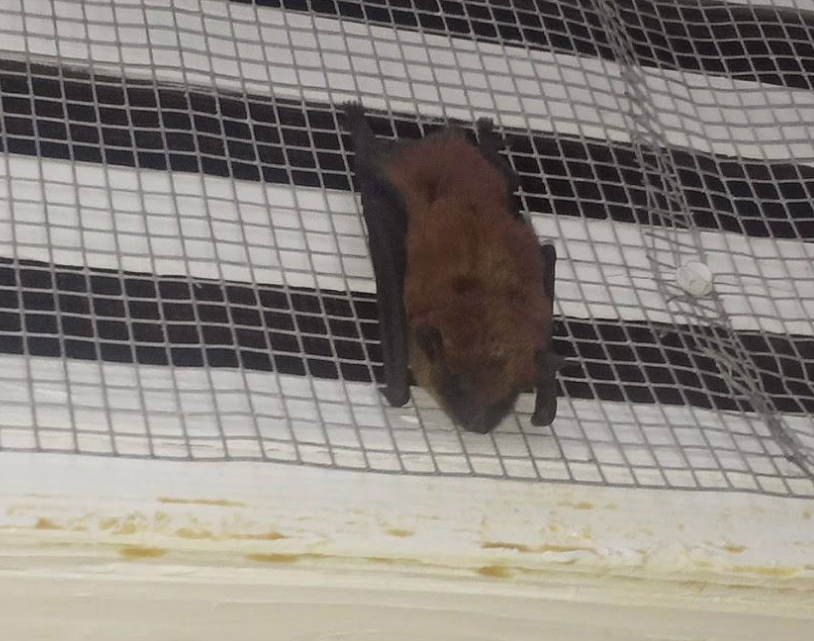
3. Exclusion
Every entry point sealed in steel mesh, heavy-gauge metal flashing or hardware cloth. Not foam, not caulk — a squirrel chews through both in an afternoon.
Why Chantilly Homeowners Call Us Instead of a Pest Company
- 20+ years, family-owned — you deal with the people doing the work.
- Licensed in Virginia (#56104) and Maryland (#049372).
- Humane methods — we get the animal out without harming it, and we tell you straight what we found.
- We seal, not just trap — the reason customers do not call us back about the same animal.
- 24/7 answering, with same-day service across Chantilly.
- Full restoration in-house — attic cleanup, insulation, chimney caps, crawl space work.
Humane Solutions. Lasting Results.
Chantilly Wildlife Removal FAQs
How fast can you get to my Chantilly home?
Same day in most cases, and we answer 24 hours a day. An animal in a living space, a bat in a bedroom, or a rabies-vector animal gets priority.
They cleared the lot behind us and now we have animals. Is that connected?
Almost certainly. Clearing does not remove wildlife, it relocates it into the nearest cover — which is your neighborhood. We see Chantilly calls arrive in clusters after nearby site work. The fix is the same either way: get the animal out, then close the openings so the next displaced one cannot move in.
My house is only 20 years old. How did something get in?
Newer houses fail at different points, not fewer. On 1990s and 2000s construction it is usually an unscreened gable louver, an unsealed ridge vent end, the kickout where a roof meets a two-story wall, or the soffit over the attached garage. An inch and a half admits a squirrel; a quarter inch admits a bat.
Can you take it out to the fields or the park?
No. Those fields are somebody’s next construction site, the animal is being dropped into territory it does not know, and another one moves into the space it left. Sealing the house is what actually ends the problem.
Do you treat insects or mice?
No. We are a wildlife company — squirrels, raccoons, bats, groundhogs, skunks, foxes, opossums, birds and snakes. For ants or roaches you want a pest control company.
Get Your Chantilly Home Sealed
Noise overhead, a hole under the shed or a smell in a wall will not resolve on its own — and the repair bill grows every week it runs.