
Serving Newington, Virginia
Wildlife Removal in Newington, VA
Newington is houses wedged between warehouses, creek valleys and some of the largest protected land in Fairfax County. The wildlife pressure here comes from the edges. We remove skunks, raccoons, groundhogs, squirrels and bats from Newington homes and seal the building so they stay out.
Licensed in VA (#56104) and MD (#049372). Family-owned, 20+ years, answering 24 hours a day.
Why Newington Homes Get Wildlife Problems
We cover Newington, Newington Forest, Newington Station, Hayfield, Gunston, Pohick and the neighborhoods off Route 1 and Telegraph Road.
Newington is a small area with unusually hard edges. On one side is a large industrial and warehouse district; on another, Fort Belvoir land; to the south, Laurel Hill — the former Lorton prison site, transferred to Fairfax County in 2002 as part of a tract of roughly 2,400 acres, with well over a thousand acres of it now permanent parkland. Add Pohick Creek, Accotink Creek and South Run, and the result is a neighborhood surrounded by land that is either protected, federally held, or industrial and largely empty at night.
That matters because none of it is going to be developed. Skunks, groundhogs, foxes, raccoons and opossums breed in that quiet ground and disperse into the nearest houses every year. Warehouse districts also carry their own rodent population, which is what brings black rat snakes into crawl spaces and garages nearby.
The housing adds the second half. Newington Forest and the surrounding subdivisions are largely 1970s and 1980s single-family houses and townhouse rows, set in wooded common land held by the association. So you get thirty-five to fifty-year-old rooflines — original wood fascia, gable louvers, low decks, crawl spaces, wood skirting — with permanent woods pressed right up against them, and shared attic and soffit runs on the attached homes, where a seal that stops at the property line does not hold.
The Animals We Remove in Newington
Skunks — the Newington signature call
Low decks, concrete stoops, shed floors and open crawl-space skirting are ideal skunk denning sites, and this area has the population to fill them. Our method is built around not getting sprayed: quiet approach, the right equipment, and no sudden pressure on the animal. Kits are usually present April through June, so we make sure the young are out before anything is closed — sealing a den with kits inside is how you end up with a far worse smell than a skunk.
Groundhogs — under the shed, the stoop and the AC pad
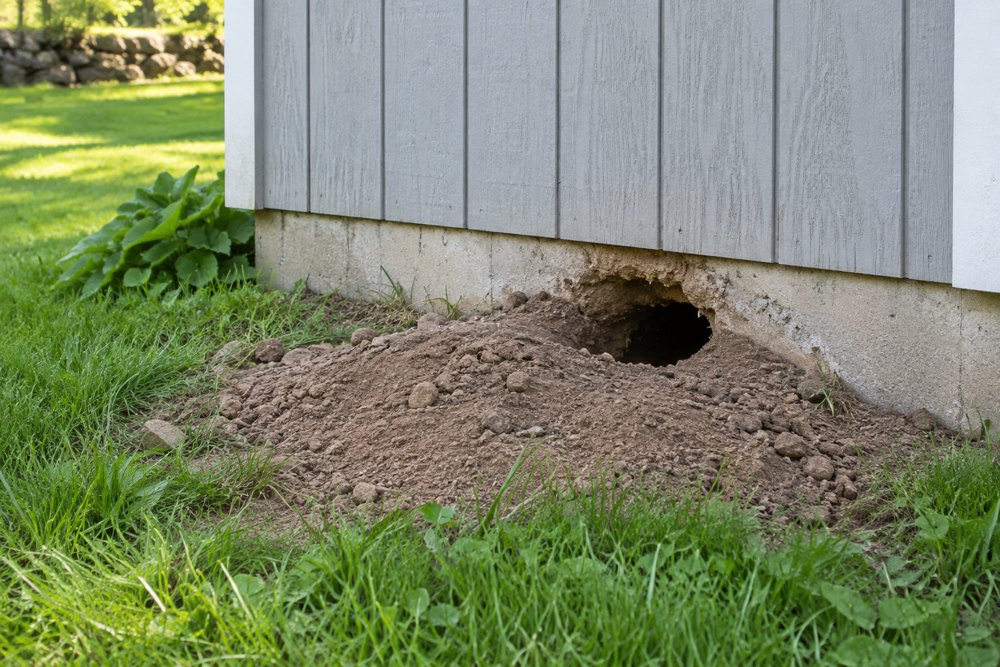
Open ground next to permanent woods is exactly what groundhogs want. The burrow systems run twenty to forty feet and undermine sheds, patios, stoops and slabs, and by the time you can see the ground sinking the damage is well along. We remove the animal and then close the void properly, because an empty burrow is simply an invitation to the next one.
Raccoons, squirrels and bats — the roofline animals
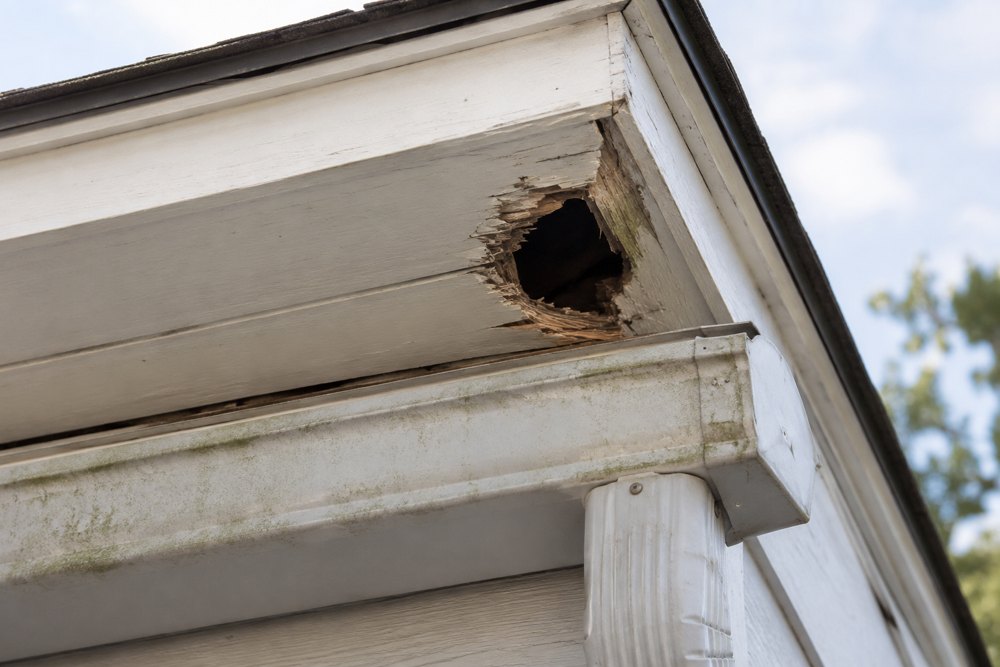
Raccoons come in at a garage soffit, a roof-to-wall joint or an uncapped chimney, and in spring that means a female with kits; they can carry rabies, so it is hand removal followed by proper cleanup and a capped flue. Squirrels need an inch and a half and find it in forty-year-old fascia and unscreened gable louvers, then chew — a genuine fire risk near wiring. Bats need a quarter inch; exclusion is the only method that works, using one-way devices and then sealing every gap above a quarter inch, with the final seal held until after the May-through-August pup season.
Also common in Newington: opossums under decks and in crawl spaces · foxes denning under sheds in spring · birds nesting in dryer and bath vents on townhouse rear walls · black rat snakes in crawl spaces and garages near the warehouse district · and dead-animal recovery inside walls and under floors.
How a Newington Job Actually Runs
1. Inspection
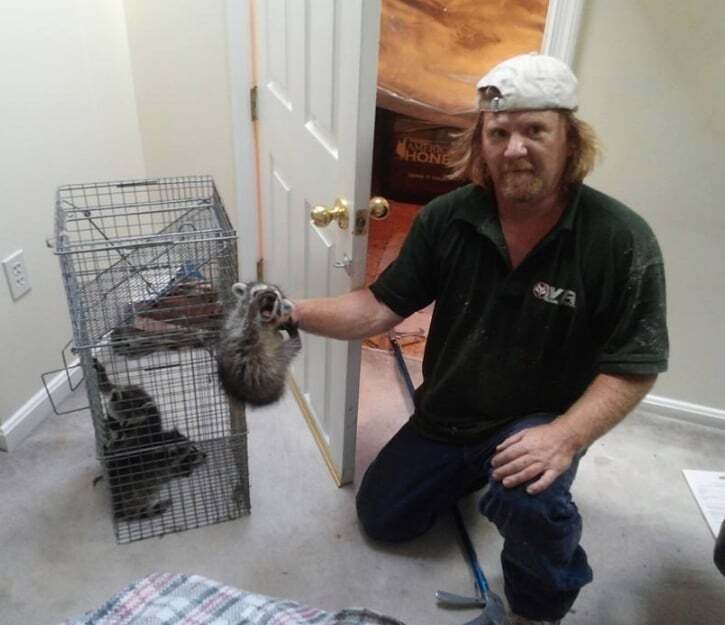
We walk the roofline, soffits, vents, chimney and foundation, then go into the attic or crawl space to find entry points, nesting sites and damage. You get photos of what we find.
2. Humane Removal
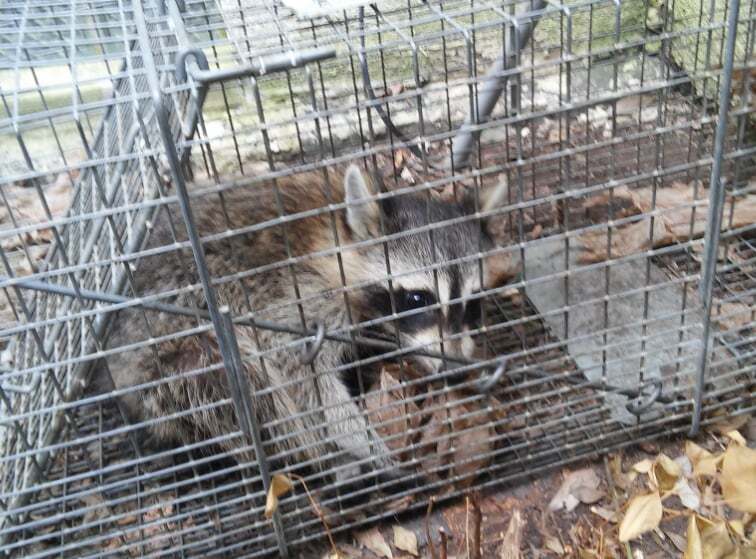
Species-appropriate and humane: trapping and hand-removal for squirrels and raccoons including young, one-way exclusion for bats, targeted work for groundhogs, skunks and snakes.
3. Exclusion
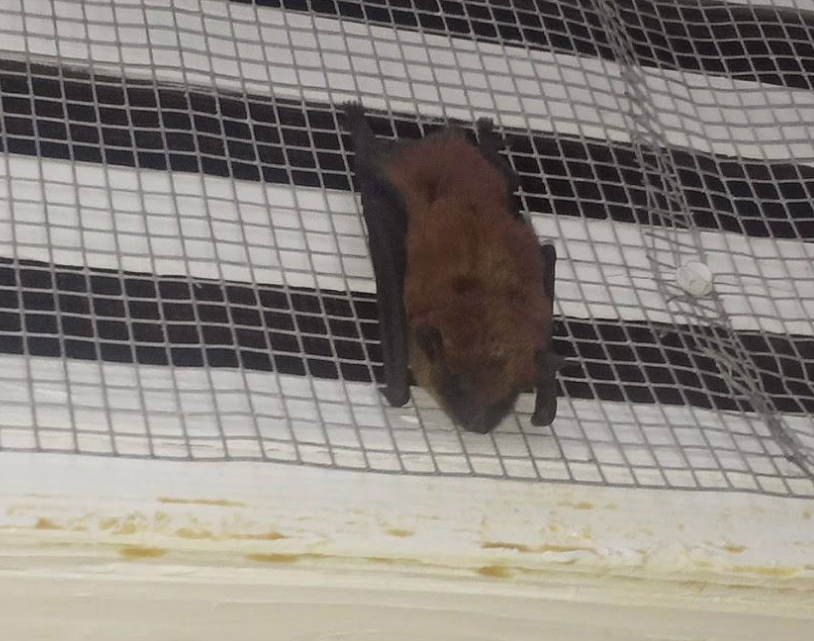
Every entry point sealed in steel mesh, heavy-gauge metal flashing or hardware cloth. Not foam, not caulk — a squirrel chews through both in an afternoon.
Why Newington Homeowners Call Us Instead of a Pest Company
- 20+ years, family-owned — you deal with the people doing the work.
- Licensed in Virginia (#56104) and Maryland (#049372).
- Humane methods — we get the animal out without harming it, and we tell you straight what we found.
- We seal, not just trap — the reason customers do not call us back about the same animal.
- 24/7 answering, with same-day service across Newington.
- Full restoration in-house — attic cleanup, insulation, chimney caps, crawl space work.
Humane Solutions. Lasting Results.
Newington Wildlife Removal FAQs
How fast can you get to my Newington home?
Same day in most cases, and we answer 24 hours a day. An animal in a living space, a bat in a bedroom or a rabies-vector animal gets priority.
There is a skunk under my deck. Will you get sprayed, and will my yard smell?
That is the first thing people ask. Our whole method is built around not triggering a spray: quiet approach, correct equipment, no rushing the animal. It is not a guarantee — it is a skunk — but it is what keeps it rare.
Can you just close the hole under my shed?
Not until we know what is inside. Sealing a den with kits or an adult still under there is how you end up with a dead animal in an inaccessible space, which is a far bigger job. We confirm it is empty, then close it in metal so nothing digs back in.
We back onto the association woods or Laurel Hill. Is that why this keeps happening?
Largely, yes. That land is protected and permanent, so it will keep producing animals every spring. We cannot change the pressure outside; we can make your building the one they cannot get into.
I own a townhouse. Will sealing my unit be enough?
Sometimes not, and we will say so on the day. Attached homes usually share attic and soffit runs, so a seal ending at your wall can leave the route open. We photograph what we find so you can take it to your neighbour or the HOA.
Get Your Newington Home Sealed
A smell under the deck, movement under the floor or scratching overhead will not resolve on its own — and the repair bill grows every week it runs.