
Serving Reston, Virginia
Wildlife Removal in Reston, VA
Reston was designed to put houses in the woods rather than the woods behind the houses — which is wonderful to live in and the reason we are busy here. We remove squirrels, raccoons and bats from Reston homes and seal the entry points so it does not happen twice.
Licensed in VA (#56104) and MD (#049372). Family-owned, 20+ years, answering 24 hours a day.
Why Reston Homes Get Wildlife Problems
We work throughout Reston — Lake Anne, Hunters Woods, Tall Oaks, South Lakes, North Point and the clusters off Sunrise Valley and Reston Parkway.
Reston is not a typical suburb and it does not behave like one. Robert E. Simon broke ground in 1964 on a planned community where housing was grouped into clusters so that shared woods and greenspace could replace front lawns. It worked: Reston has more than 55 miles of pathways and tree canopy over roughly half its land area. From a wildlife standpoint that is a continuous, connected habitat that runs to the back of nearly every house in town. A squirrel or raccoon in Reston never has to cross open ground to reach your roof.
Then there is the architecture. The original 1960s and 1970s clusters were built deliberately flat-roofed or low-sloped, wood-sided and tucked under the trees — modern and handsome, and now sixty years old. Low-slope roofs, deep wood fascia, flat-roof edge detailing and vertical wood siding all age into gaps, and they sit under constant leaf litter and shade, which keeps the wood damp and soft. Soft wood is what a squirrel needs. The later 1980s and 1990s sections are conventional pitched-roof houses and townhouse rows with their own weak points at soffit returns and roof vents.
The last thing that makes Reston distinct is that a lot of the exterior may not be entirely yours to change — which matters once we get to the repair. More on that below.
The Animals We Remove in Reston
Eastern gray squirrels — the number one Reston call
Half the town is under tree canopy, so squirrels are never in short supply and they only need about an inch and a half. On the older clusters they work the wood fascia and the flat-roof edge; on the newer houses it is the soffit return, a gable louver or a lifted ridge vent. Once in, they chew constantly — wiring included, which in a packed attic is a real fire risk. They breed twice a year, February to April and August to September, so one animal in winter is a litter by spring.
Raccoons — the expensive one
Reston’s mature trees put branches right over roofs, and a 15–25 pound raccoon uses them like a staircase. An uncapped chimney flue is the other standing invitation. Inside you get flattened insulation, torn ductwork and a latrine that eventually soaks through the ceiling. Raccoons can carry rabies, so this is not a job to handle yourself — this is not a job to try yourself.
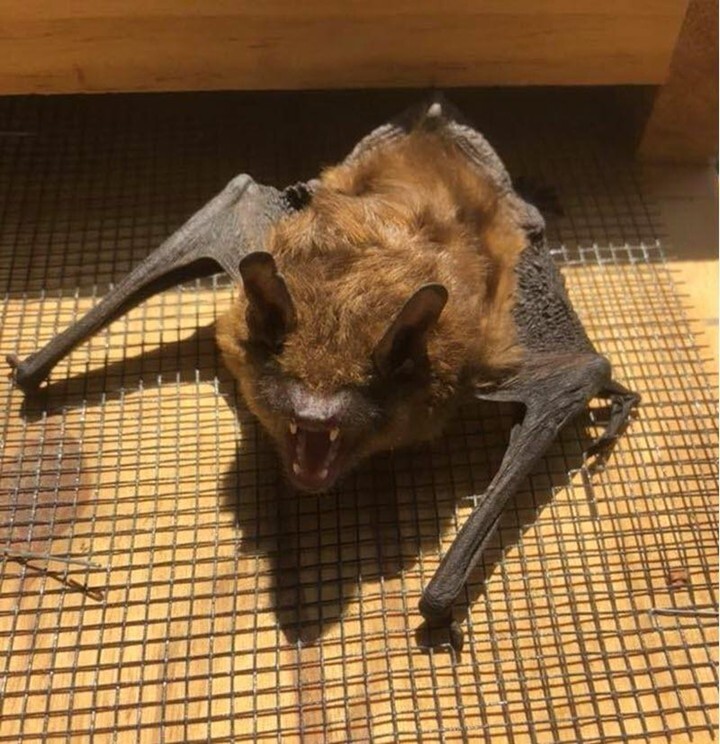
Bats — the most specialised animal we handle
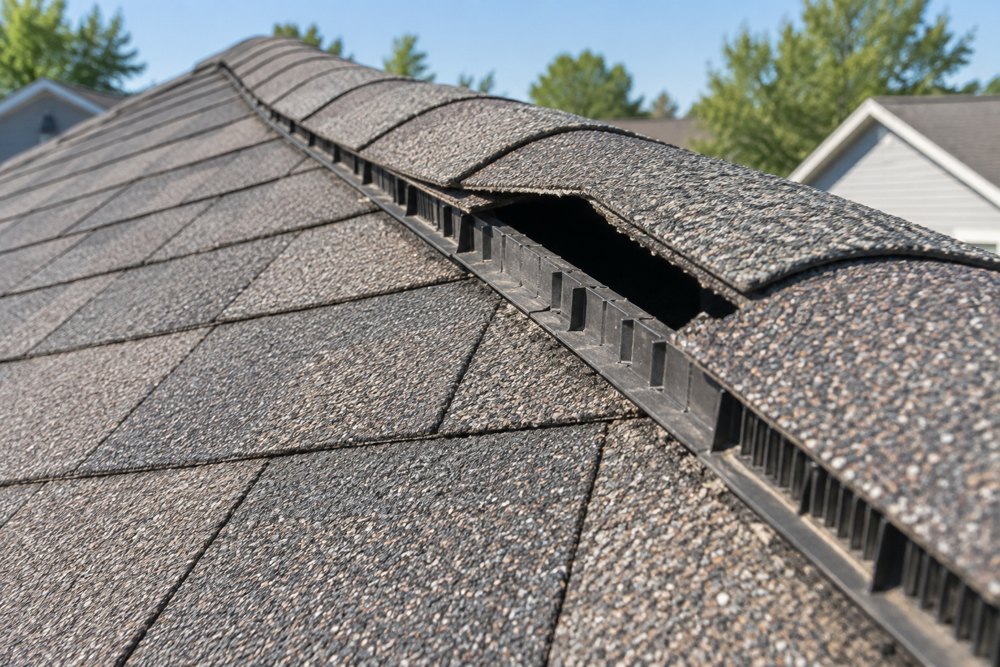
A quarter-inch gap is enough. On Reston’s older low-slope and flat-roofed clusters that is usually the roof edge, a soffit seam or the flashing where two roof planes meet; on the newer stock it is a gable louver or ridge gap. Bats cannot be trapped or poisoned. Exclusion is the only method that actually works: one-way devices that let them out and not back in, then sealing every gap over a quarter inch.
Timing matters. From roughly May through August there are flightless pups in the roost, and sealing then shuts them inside your wall. In those months we fit devices and finish the seal once the young can fly.
Also common in Reston: groundhogs burrowing under decks, sheds and cluster patios · skunks under stoops and porch slabs · foxes denning in the wooded common areas · opossums in garages and dead in wall voids · birds nesting in dryer and bath vents · black rat snakes along the pathways and lake edges · and dead-animal recovery, which is its own job inside a finished wall.
How a Reston Job Actually Runs
1. Inspection
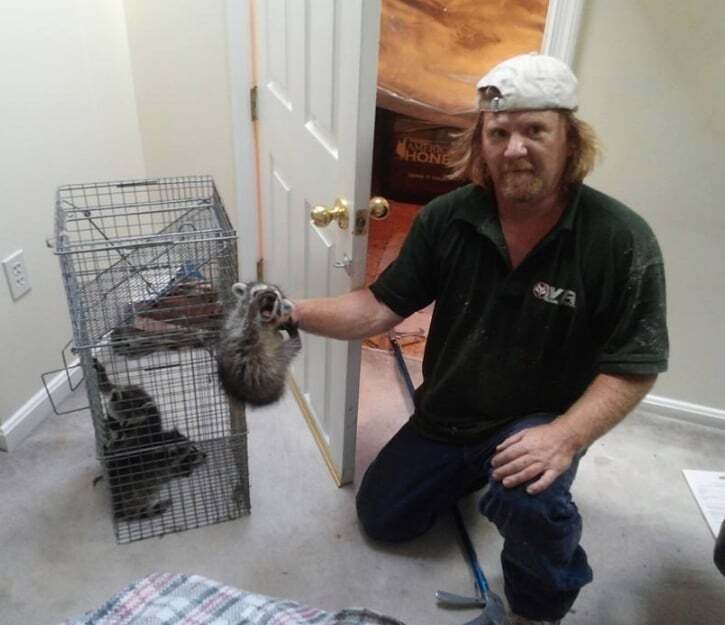
We walk the roofline, soffits, vents, chimney and foundation, then go into the attic or crawl space to find entry points, nesting sites and damage. You get photos of what we find.
2. Humane Removal
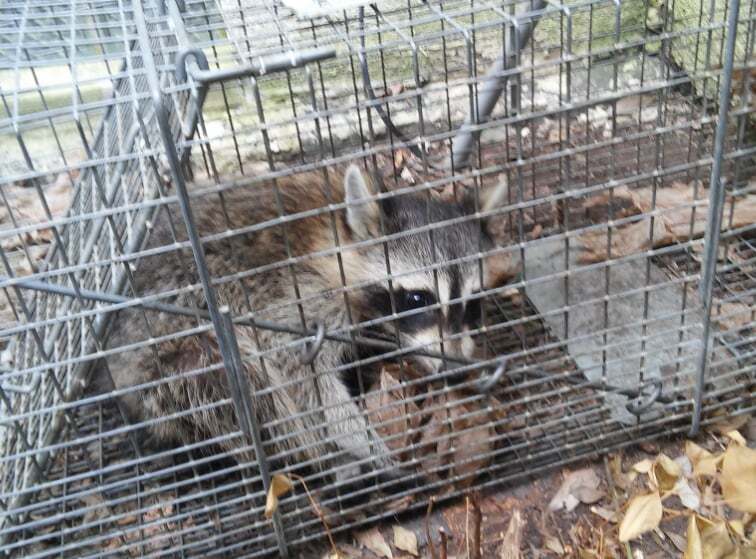
Species-appropriate and humane: trapping and hand-removal for squirrels and raccoons including young, one-way exclusion for bats, targeted work for groundhogs, skunks and snakes.
3. Exclusion
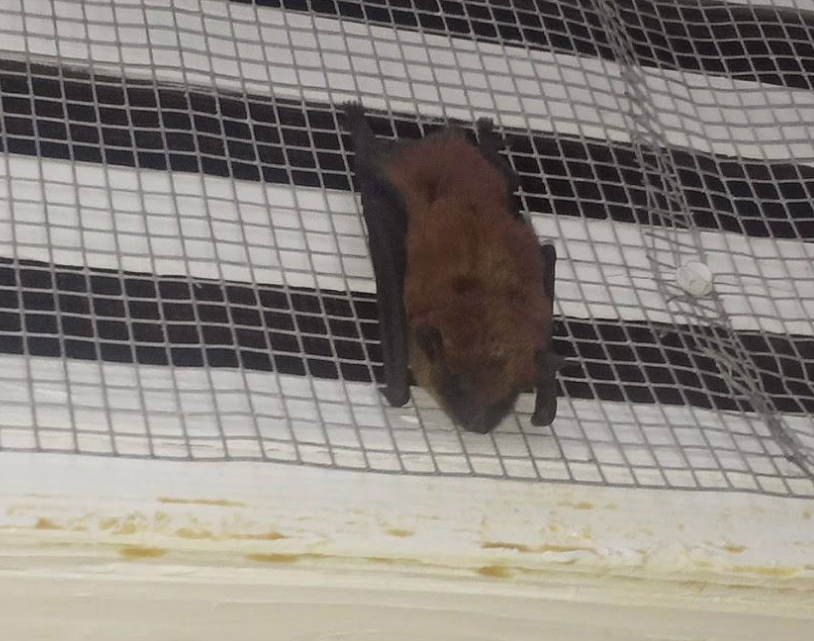
Every entry point sealed in steel mesh, heavy-gauge metal flashing or hardware cloth. Not foam, not caulk — a squirrel chews through both in an afternoon.
Why Reston Homeowners Call Us Instead of a Pest Company
- 20+ years, family-owned — you deal with the people doing the work.
- Licensed in Virginia (#56104) and Maryland (#049372).
- Humane methods — we get the animal out without harming it, and we tell you straight what we found.
- We seal, not just trap — the reason customers do not call us back about the same animal.
- 24/7 answering, with same-day service across Reston.
- Full restoration in-house — attic cleanup, insulation, chimney caps, crawl space work.
Humane Solutions. Lasting Results.
Reston Wildlife Removal FAQs
How fast can you get to my Reston home?
Same day in most cases, and we answer 24 hours a day. An animal in a living space, a bat in a bedroom, or a rabies-vector animal gets priority.
Do I need Reston Association approval before you do the work?
Possibly, for the visible repair. RA rules require approval for most exterior alterations before the work happens, and exclusion repairs such as caps, vent covers, fascia and siding can fall under that. Getting the animal out and the entry point closed comes first; we will tell you which parts of the permanent repair are likely to need DRB or covenants sign-off, and in a cluster, a cluster officer’s signature.
Our cluster maintains the exterior. Who handles the repair?
We will walk it with you. Where the cluster or condominium association owns or maintains the roof, siding or soffits, the association usually needs to authorise the repair — and in a shared roof run, a seal that stops at one unit will not hold anyway. We give you an inspection report you can hand straight to the board.
Can you relocate the animal into the woods behind us?
No. Those woods are exactly where it came from, and the vacancy gets refilled within days. Sealing the house is what actually ends the problem.
Do you treat insects or mice?
No. We are a wildlife company — squirrels, raccoons, bats, groundhogs, skunks, foxes, opossums, birds and snakes. For ants or roaches you want a pest control company.
Get Your Reston Home Sealed
Scratching overhead, droppings below a vent or a smell in a wall will not resolve on its own — and the repair bill grows every week it runs.