
Serving Mount Vernon, Virginia
Wildlife Removal in Mount Vernon, VA
Mount Vernon is wooded hillsides running down to the Potomac, and the houses were deliberately tucked into the trees. That makes for beautiful neighborhoods and easy roof access for wildlife. We remove raccoons, squirrels, bats, opossums and snakes from Mount Vernon homes and seal the building behind them.
Licensed in VA (#56104) and MD (#049372). Family-owned, 20+ years, answering 24 hours a day.
Why Mount Vernon Homes Get Wildlife Problems
We work the whole Mount Vernon district — Hollin Hills, Waynewood, Stratford Landing, Wellington, Belle Haven, Fort Hunt, Riverside Estates and the neighborhoods off the George Washington Parkway.
The land comes first here. This is the Potomac shoreline: Dyke Marsh, Little Hunting Creek, Dogue Creek and a continuous protected strip of parkland along the Parkway. Tidal marsh and riverbank hold a dense population of raccoons, opossums, foxes and black rat snakes permanently, and the creek valleys carry them straight up into the neighborhoods. Unlike a fragmented suburb, the green here is one connected system that will never be built on.
Then the houses, and this is where Mount Vernon is unusual. Hollin Hills is a nationally listed mid-century modern neighborhood of more than 450 homes built between 1949 and 1971, designed by Charles Goodman on lots of at least a third of an acre, with the houses set into the hillside among the existing trees. The architecture is the point: flat and low-slope roofs, deep overhangs, exposed beams, floor-to-ceiling glass, ground-hugging profiles. It also means the roof edge is often within reach of a limb or a bank, the fascia is a simple wood board, and there is no steep pitch to discourage anything. Waynewood, Stratford Landing and Fort Hunt add conventional 1950s and 60s ramblers and split-levels, now seventy years old, with original soffits and uncapped chimneys.
Two more local factors: the mature canopy keeps gutters loaded and roofs damp, which is how a fascia board or a low-slope edge softens in the first place, and the whole area is under a slow teardown-and-rebuild cycle, so new work meeting old work creates fresh joints every year.
The Animals We Remove in Mount Vernon
Raccoons — the river-corridor animal
Raccoons are heavy along the Potomac and its creeks and they are confident around houses. In Mount Vernon they get in at a low-slope roof edge, a soffit above a carport or garage, the joint where an addition meets the original roof, or an uncapped chimney in the older streets. They tear insulation and use one corner as a latrine. Raccoons can carry rabies, so removal is hand work, the cleanup matters, and the flue gets capped.
Opossums — more common here than most people realise
Damp ground, decks and crawl spaces near the marsh suit them, and a good share of our opossum calls are actually a smell in a wall or under a floor because the animal has already died in there. Opossums are not a rabies vector and they eat ticks, so nobody needs to panic about one crossing the deck — but one living under the house is a different matter.
Squirrels, bats and snakes
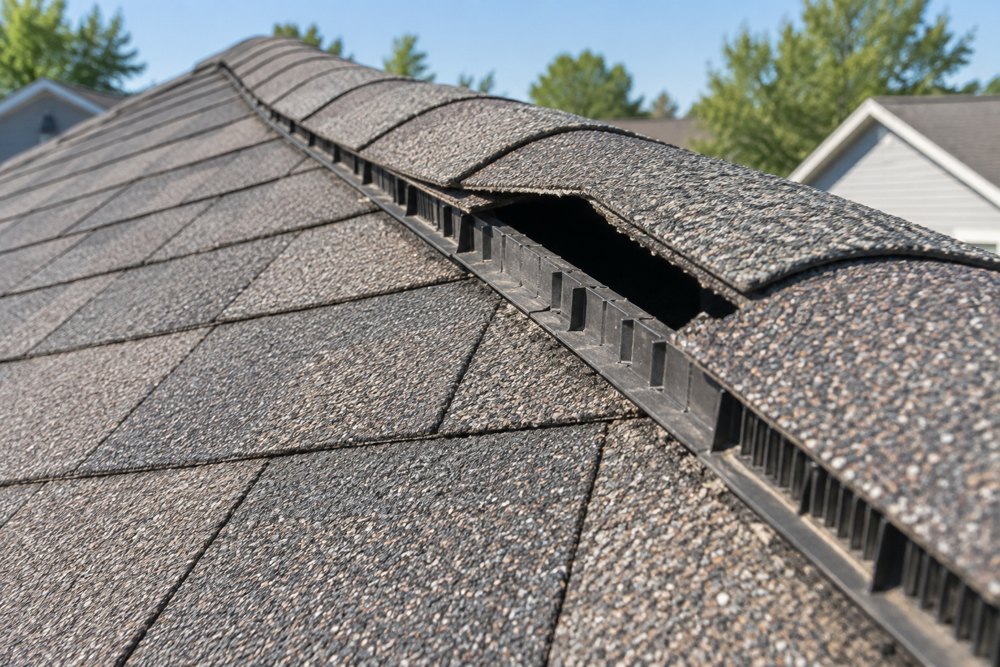
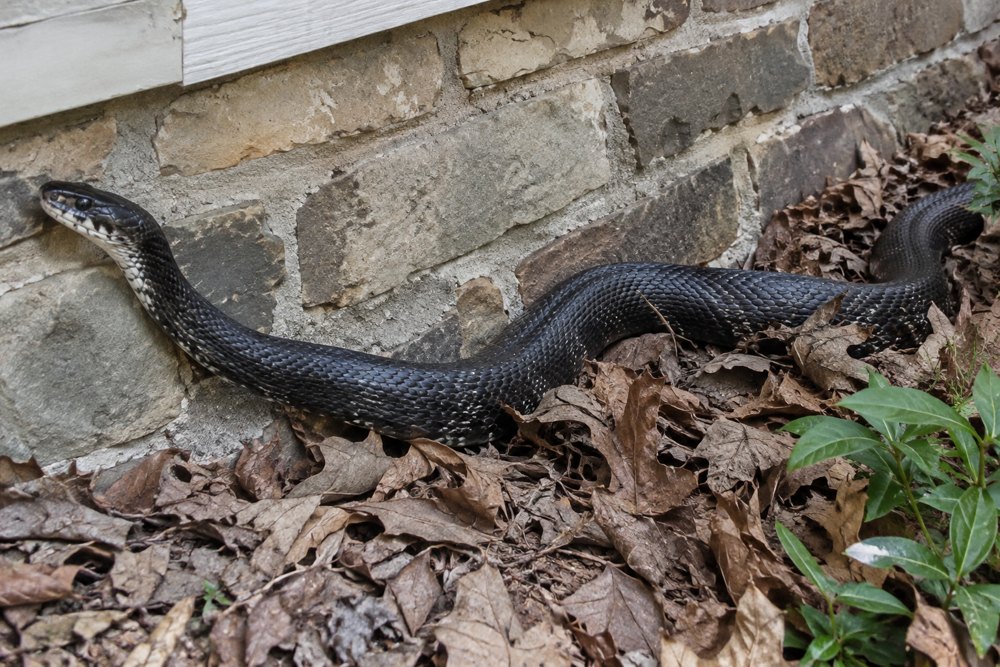
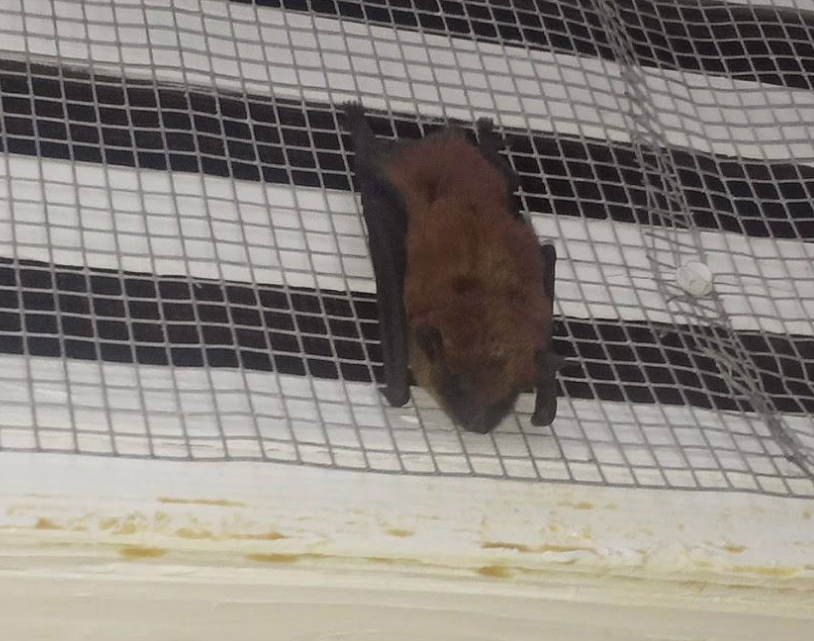
Squirrels are the volume call: an inch and a half at a soft fascia board or a soffit return, then constant chewing, and chewed wiring in an attic is a real fire risk. Bats need only a quarter-inch gap, and flat-roof edges, deep overhangs and louvered vents all supply it; exclusion is the only method that works — one-way devices, then sealing every gap above a quarter inch, with the final seal held back until after the May-through-August pup season. Black rat snakes are common near the marsh and in crawl spaces; they are harmless to people and good rodent control, we do not kill them, and a snake indoors usually means you have rodents.
Also common in Mount Vernon: groundhogs under sheds, stoops and retaining walls on the slopes · skunks under decks and low porches · foxes denning under sheds and additions in spring · birds nesting in dryer and bath vents · and dead-animal recovery inside walls, low roofs and crawl spaces.
How a Mount Vernon Job Actually Runs
1. Inspection
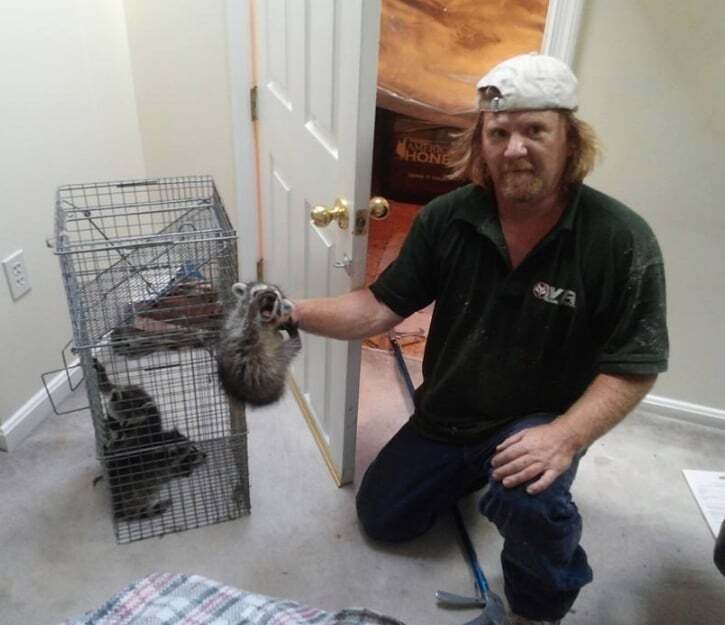
We walk the roofline, soffits, vents, chimney and foundation, then go into the attic or crawl space to find entry points, nesting sites and damage. You get photos of what we find.
2. Humane Removal
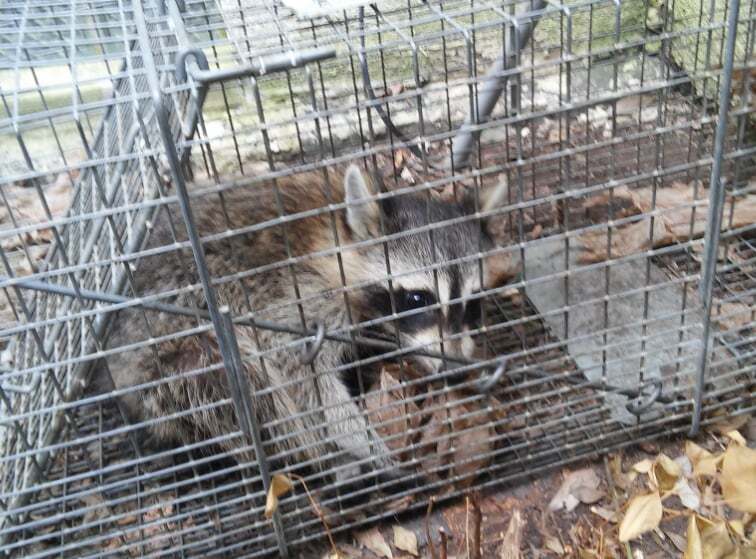
Species-appropriate and humane: trapping and hand-removal for squirrels and raccoons including young, one-way exclusion for bats, targeted work for groundhogs, skunks and snakes.
3. Exclusion
Every entry point sealed in steel mesh, heavy-gauge metal flashing or hardware cloth. Not foam, not caulk — a squirrel chews through both in an afternoon.
Why Mount Vernon Homeowners Call Us Instead of a Pest Company
- 20+ years, family-owned — you deal with the people doing the work.
- Licensed in Virginia (#56104) and Maryland (#049372).
- Humane methods — we get the animal out without harming it, and we tell you straight what we found.
- We seal, not just trap — the reason customers do not call us back about the same animal.
- 24/7 answering, with same-day service across Mount Vernon.
- Full restoration in-house — attic cleanup, insulation, chimney caps, crawl space work.
Humane Solutions. Lasting Results.
Mount Vernon Wildlife Removal FAQs
How fast can you get to my Mount Vernon home?
Same day in most cases, and we answer 24 hours a day. An animal in a living space, a bat in a bedroom or a rabies-vector animal gets priority.
I live in Hollin Hills. Will your repairs ruin the look of the house?
No — and we understand why you are asking. The flat roof edges, exposed beams and clean fascia lines are the whole point of these houses. We seal in metal because nothing else holds, but it is cut to the opening and kept behind the fascia or overhang line wherever the detail allows, and you see each proposed repair, with photos, before we do it. If your neighborhood has design review for exterior work, tell us and we will document the repair so you can put it in front of them.
Why do flat and low-slope roofs get more problems?
Two reasons. The roof edge is usually low and easy to reach, and there is no steep pitch to make walking on it awkward. Add deep overhangs, exposed wood fascia and shade that keeps everything slow to dry, and you get soft spots at the edge — which is exactly where squirrels and raccoons start.
We back onto the marsh or the Parkway woods. Will this keep happening?
Animals will keep crossing the yard; that strip is protected and permanent. What ends the cycle is the building being closed properly, so the traffic outside stays outside.
Will you just trap it and take it away?
Removal alone is temporary. The opening that let one animal in will let the next one in, often within days. Every job ends with the entry points sealed, which is the part that actually finishes it.
Get Your Mount Vernon Home Sealed
Scratching overhead, movement under the floor or a smell in a wall will not resolve on its own — and the repair bill grows every week it runs.