
Serving Sterling, Virginia
Wildlife Removal in Sterling, VA
Sterling is four building eras stacked into one zip code, and a wildlife job here depends entirely on which one your house belongs to. We remove squirrels, raccoons, bats, groundhogs and snakes from Sterling homes, then seal the house so it does not happen again.
Licensed in VA (#56104) and MD (#049372). Family-owned, 20+ years, answering 24 hours a day.
Why Sterling Homes Get Wildlife Problems
We cover all of Sterling — Sterling Park, Sugarland Run, Countryside, Cascades, Lowes Island and Broad Run Farms — and no two of those are the same building job.
Sterling Park is the oldest layer and the most distinctive. U.S. Steel and the builder M.T. Broyhill and Sons broke ground in the early 1960s and finished the first sections by 1966, roughly a thousand steel-framed houses, with the wider community complete by 1967. Those homes are now sixty years old. The frame may be steel, but the parts animals actually use are not: wood fascia, wood or aluminum soffits, gable louvers, carport and utility-room roofs, and original vents. We have been called to Sterling Park houses where the owner assumed a steel house could not be chewed into. Nothing chewed the steel. A squirrel went through a rotted fascia board two feet above it.
Sugarland Run adds 1970s single-family homes and townhouse rows on wooded, rolling ground along the run itself. Attached homes share attic and soffit runs, so an animal entering three doors down is your problem too. Countryside, Cascades and Lowes Island are the 1980s–90s layer: larger houses, more complicated rooflines, ridge vents, wrapped trim and more roof-to-wall joints per house than anything built here before. Broad Run Farms is different again — a 1950s subdivision of large wooded lots running down toward the Potomac, which in wildlife terms means river-corridor animals arriving in the yard as a matter of routine.
Tying it together is water and cover. The Potomac, Broad Run, Sugarland Run and the mature trees planted around sixty-year-old houses give raccoons, foxes, opossums and snakes continuous routes through every part of Sterling.
The Animals We Remove in Sterling
Bats — more common in Sterling than most people expect
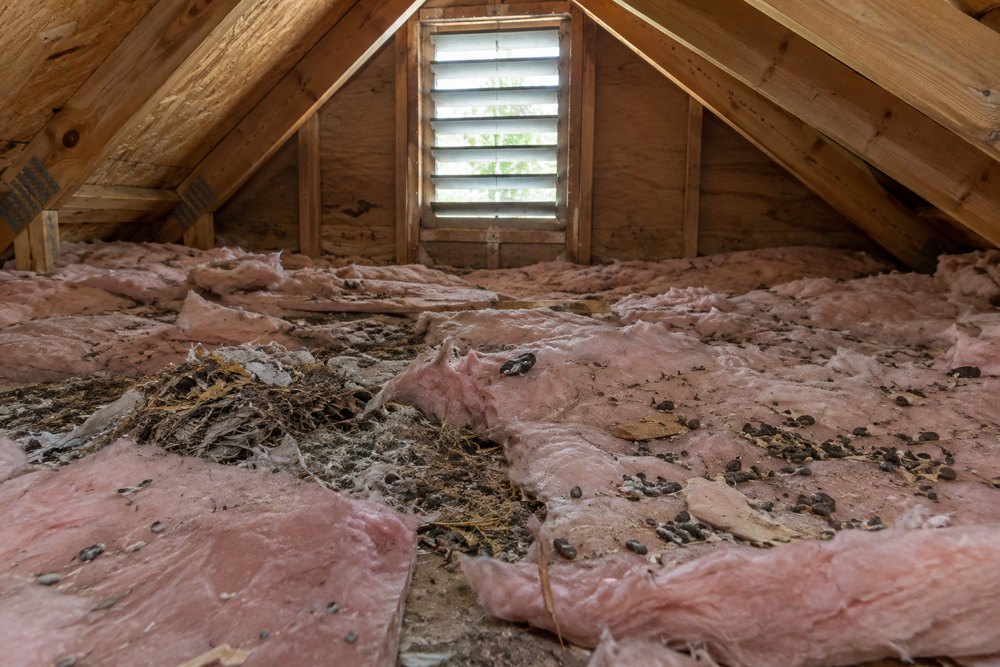
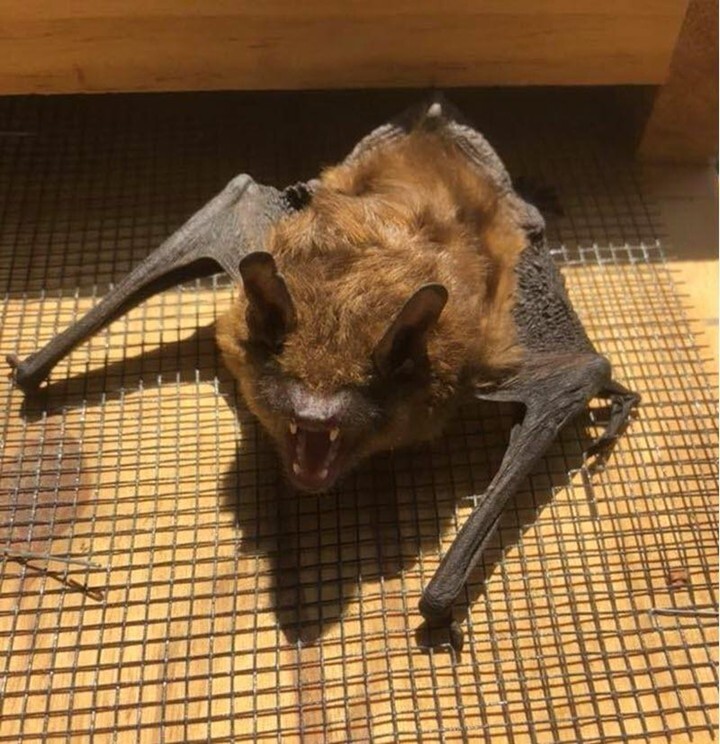
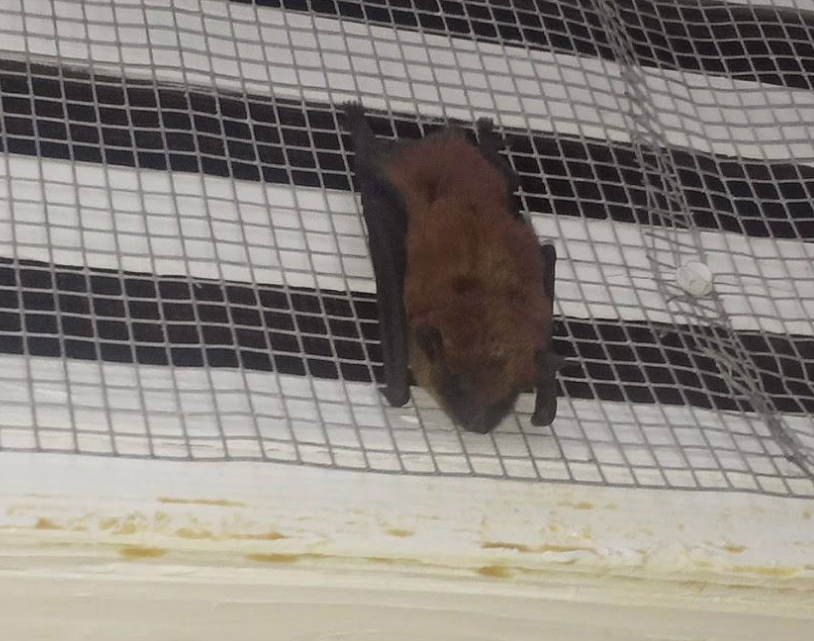
Big brown bats need a quarter-inch gap, and a sixty-year-old gable louver with a rusted-out screen is an open door. Low single-story rooflines make Sterling Park roosts easy to miss: the colony is over a bedroom, not up in a tall attic, and the first sign is usually a smell or a stain rather than a noise. Bats cannot be trapped or poisoned. Exclusion is the only method that works — one-way devices, then sealing every gap above a quarter inch. Timing matters: from roughly May through August flightless pups are present, and sealing then traps them in the wall. In those months we fit devices and finish the seal once the young can fly.
Eastern gray squirrels — the volume call in every part of Sterling
An inch and a half is enough. On the older houses they use rotted fascia, the soffit return and carport roof edges; on the 1990s houses they use gable louvers and the ends of ridge vents. Once in, they chew, and chewed wiring in an insulated attic is a real fire risk. Two breeding seasons a year, late winter and late summer, means the problem multiplies.
Raccoons — attics, chimneys and crawl spaces
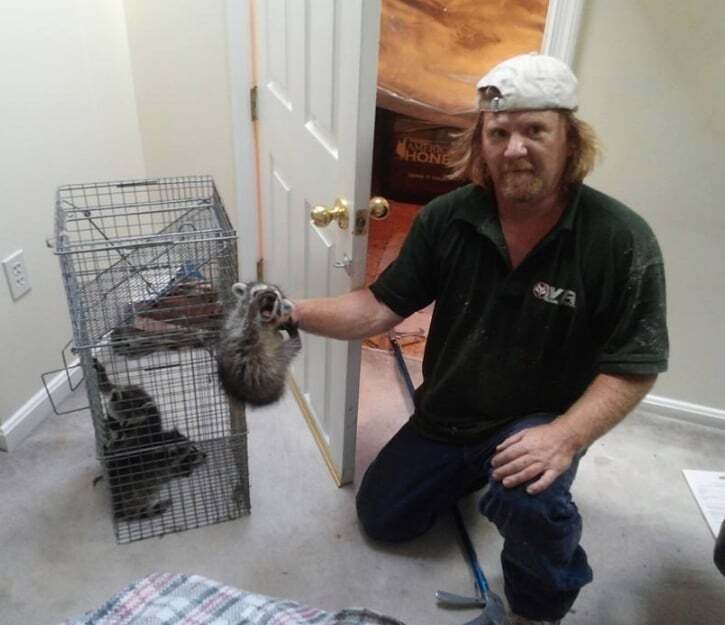
A female raccoon will tear open a soffit or a vent that a squirrel merely slipped through, and in the older sections an uncapped chimney is just as likely an entry as the roof. Raccoons can carry rabies, and kits are usually present in spring, so we remove adults and young by hand rather than leaving anything sealed inside. Capping the flue and closing the opening in heavy metal is what stops the next one.
Also common in Sterling: groundhogs burrowing under sheds, concrete stoops and carport slabs · skunks and opossums under porches and low decks · foxes denning under sheds and outbuildings in spring, especially out toward Broad Run Farms · birds nesting in dryer and bath vents · black rat snakes in crawl spaces and basements near the run corridors · and dead-animal recovery inside walls and low attics.
How a Sterling Job Actually Runs
1. Inspection
We walk the roofline, soffits, vents, chimney and foundation, then go into the attic or crawl space to find entry points, nesting sites and damage. You get photos of what we find.
2. Humane Removal
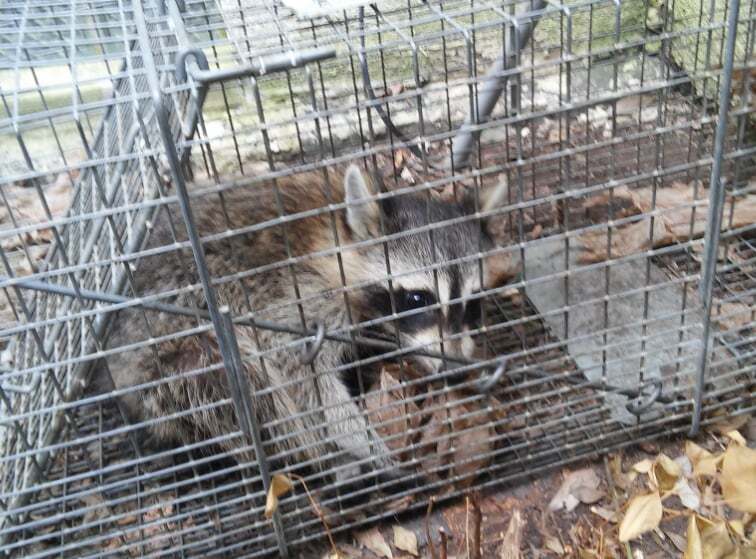
Species-appropriate and humane: trapping and hand-removal for squirrels and raccoons including young, one-way exclusion for bats, targeted work for groundhogs, skunks and snakes.
3. Exclusion
Every entry point sealed in steel mesh, heavy-gauge metal flashing or hardware cloth. Not foam, not caulk — a squirrel chews through both in an afternoon.
Why Sterling Homeowners Call Us Instead of a Pest Company
- 20+ years, family-owned — you deal with the people doing the work.
- Licensed in Virginia (#56104) and Maryland (#049372).
- Humane methods — we get the animal out without harming it, and we tell you straight what we found.
- We seal, not just trap — the reason customers do not call us back about the same animal.
- 24/7 answering, with same-day service across Sterling.
- Full restoration in-house — attic cleanup, insulation, chimney caps, crawl space work.
Humane Solutions. Lasting Results.
Sterling Wildlife Removal FAQs
How fast can you get to my Sterling home?
Same day in most cases, and we answer 24 hours a day. An animal in a living space, a bat in a bedroom, or a rabies-vector animal gets priority.
I have one of the steel houses in Sterling Park. Does that change anything?
Not for the animal. Squirrels, raccoons and bats come in at the wood and vent details — fascia, soffits, gable louvers, roof edges — and those are conventional on every house in the Park. What it does change is our repair: we fasten and flash to suit what is actually behind the finish, which we confirm during the inspection rather than assuming.
The houses on my street are sixty years old. Is the whole roofline going to need work?
Usually not. We seal the openings we can demonstrate are being used, plus the obvious weak points next to them, and we show you photos of each one. If a fascia run or a vent is too far gone to seal honestly, we will say so rather than patch over it.
We back onto the run. Will this keep happening?
The corridor keeps bringing animals through the yard — that we cannot change. What ends the cycle is the building being closed properly, so the ones passing through have nowhere to get in.
Do you handle townhouses in Sugarland Run?
Yes, and we will be straight with you about the limits: attached homes share attic and soffit runs, so a seal that stops at your property line often does not hold. We document what we find so you can take it to your neighbour or the association.
Get Your Sterling Home Sealed
Scratching overhead, droppings under a vent or a smell in a wall will not resolve on its own — and the repair bill grows every week it runs.