
Serving Centreville, Virginia
Wildlife Removal in Centreville, VA
Almost all of Centreville went up in one ten-year building boom, which means thousands of houses are reaching the same age and failing in the same places at the same time. We know which places. We remove the animal and seal the house so the next one cannot get in.
Licensed in VA (#56104) and MD (#049372). Family-owned, 20+ years, answering 24 hours a day.
Why Centreville Homes Get Wildlife Problems
We cover Centreville and the subdivisions around it — Little Rocky Run, Virginia Run, Centre Ridge, Sully Station, Compton Village, London Towne and the streets off Braddock, Route 28 and Route 29.
Centreville’s history is a small 1792 crossroads town and then an explosion. The census went from about 7,500 people in 1980 to over 26,500 in 1990 — a 255% jump in a decade — and on to nearly 49,000 by 2000. That is the single most useful fact about wildlife work here: the housing stock is overwhelmingly one generation, built roughly 1985 to 1998, and it is now thirty to forty years old all at once.
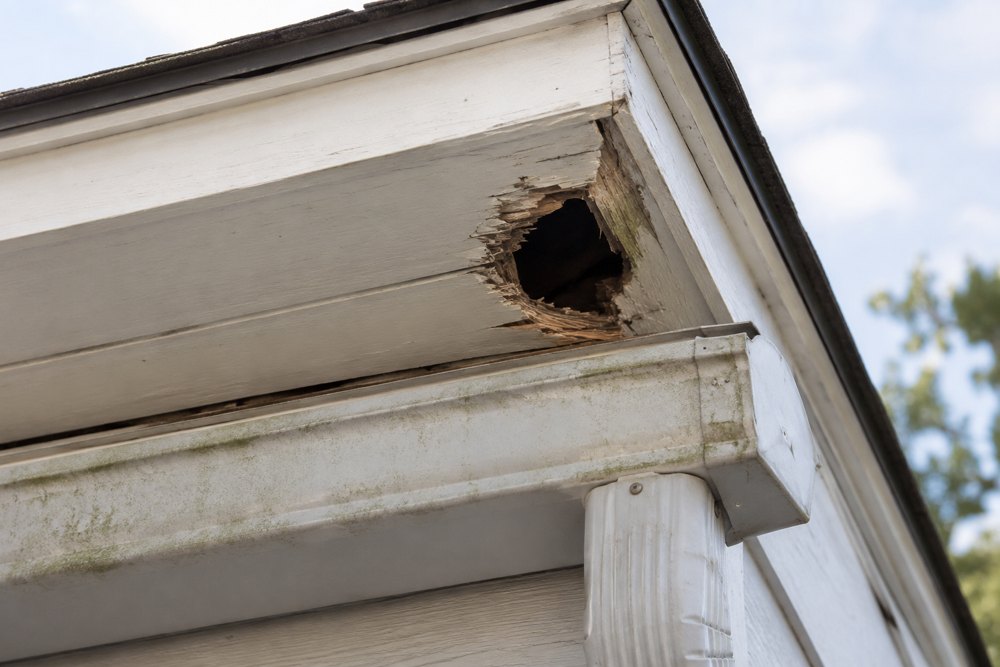
Thirty-five years is precisely when builder-grade exterior materials give up. The hardboard and composite siding of that era swells and delaminates at the bottom edge. Wood soffits and fascia rot at the corners where gutters overflow. Original plastic ridge vents go brittle in the sun and lift. Aluminum-wrapped trim loosens and opens a gap behind it. Gable louvers lose their screens. Every one of those is a squirrel-sized opening, and on a street where forty houses were framed by the same crew in the same year, they open in the same spot on all forty. We often find the identical entry point three doors down.
The other half of the story is how those neighborhoods were laid out. Little Rocky Run alone is about 2,700 homes on 950 acres with roughly 215 acres deliberately kept as wooded open space threaded behind the houses, and the Cub Run and Big Rocky Run stream valleys carry miles of continuous woodland straight through town toward Bull Run. Wildlife travels those corridors to your back fence without ever crossing a road. Add the enormous townhouse stock — over a thousand townhomes in Little Rocky Run by itself — and you get shared attic and soffit runs where one open vent serves several units.
The Animals We Remove in Centreville
Groundhogs — the one Centreville calls about most in summer
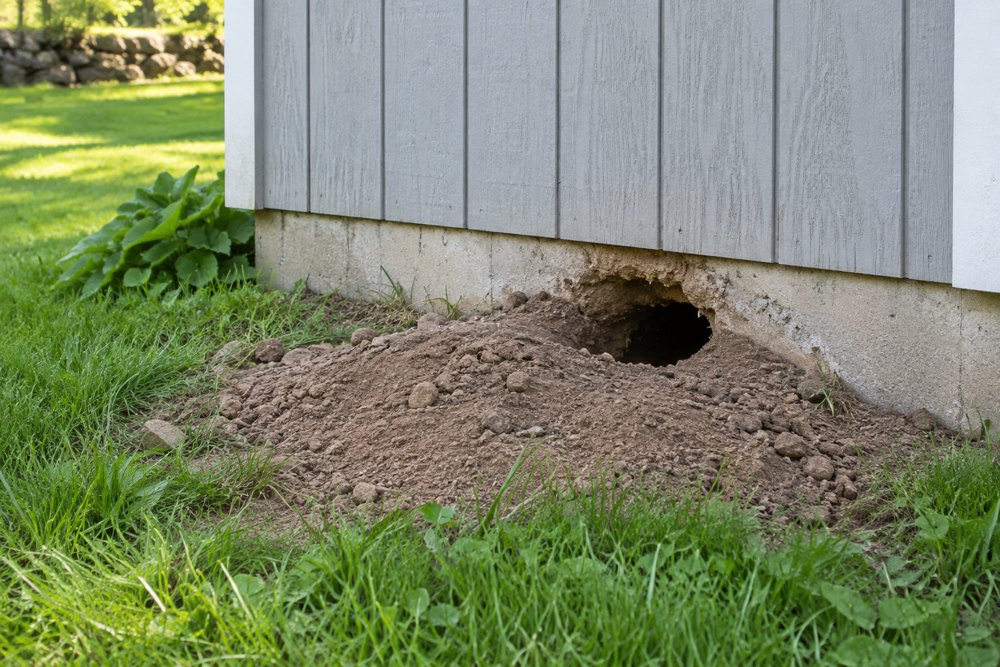
Open lawns backing onto wooded common ground is ideal groundhog country, and a burrow system runs 20 to 40 feet with multiple entrances. The damage is structural rather than cosmetic: they excavate under sheds, deck footings, patios, concrete stoops and AC pads, and the soil settles afterwards. Filling the hole without removing the animal just gets you a new hole.
Eastern gray squirrels — the age-of-the-house problem
An inch and a half gets them in, and a 1990s Centreville roofline hands it over: a lifted ridge vent, a rotted fascia corner, a swollen siding edge, an unscreened gable louver. They chew once inside, wiring included, which is a genuine fire risk in a packed attic. Two breeding seasons a year, February to April and August to September.
Raccoons and bats — the costly and the tricky
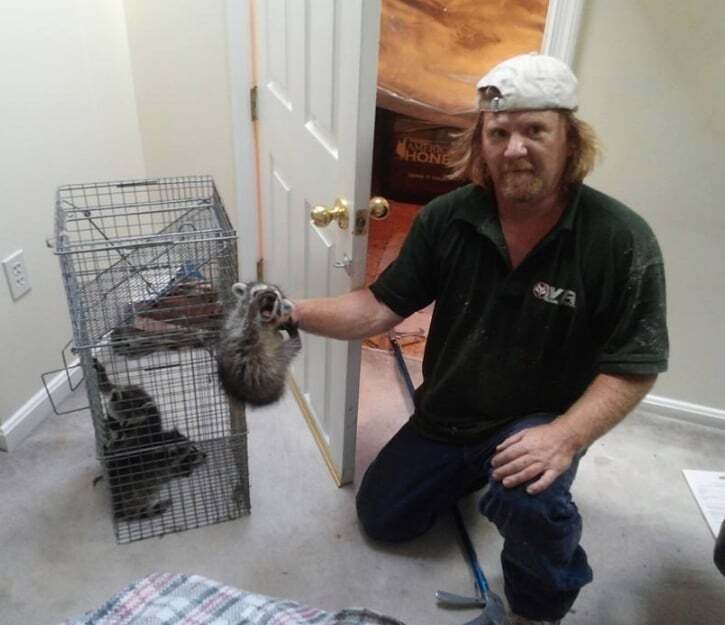
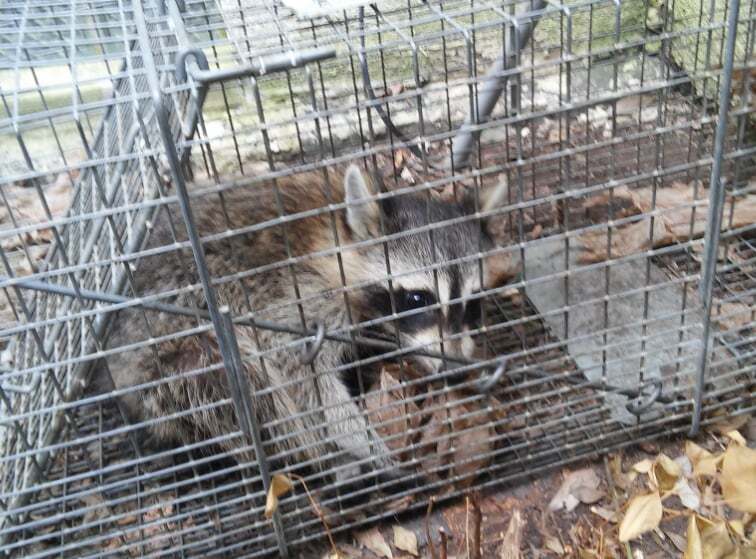
Raccoons take an uncapped flue or work open a weak roof edge, then flatten insulation, tear ductwork and establish a latrine that soaks through the ceiling. They can carry rabies, so this is not a job to handle yourself.
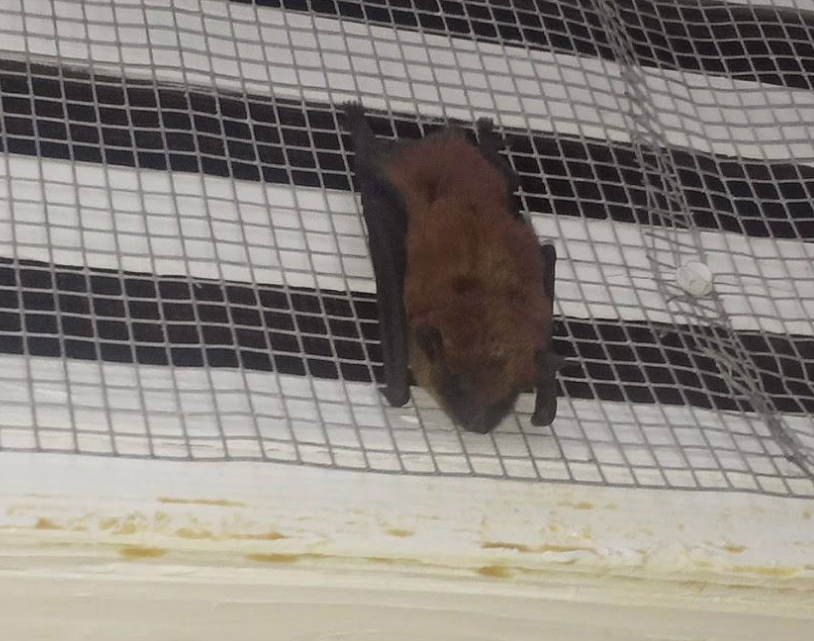
Bats need only a quarter-inch gap — a brittle ridge vent or a gable louver is plenty. They cannot be trapped or poisoned; exclusion is the only method that actually works, using one-way devices and then sealing everything over a quarter inch. Timing matters: roughly May through August there are flightless pups in the roost and sealing traps them inside the structure, so in those months we fit devices and complete the seal once the young can fly.
Also common in Centreville: skunks under stoops and porch slabs · foxes along the Cub Run and Rocky Run corridors · opossums in garages and dead in wall voids · birds nesting in dryer and bath vents, which on townhouses sit high on a rear wall · black rat snakes near the stream valleys · and dead-animal recovery inside walls and crawl spaces.
How a Centreville Job Actually Runs
1. Inspection
We walk the roofline, soffits, vents, chimney and foundation, then go into the attic or crawl space to find entry points, nesting sites and damage. You get photos of what we find.
2. Humane Removal
Species-appropriate and humane: trapping and hand-removal for squirrels and raccoons including young, one-way exclusion for bats, targeted work for groundhogs, skunks and snakes.
3. Exclusion
Every entry point sealed in steel mesh, heavy-gauge metal flashing or hardware cloth. Not foam, not caulk — a squirrel chews through both in an afternoon.
Why Centreville Homeowners Call Us Instead of a Pest Company
- 20+ years, family-owned — you deal with the people doing the work.
- Licensed in Virginia (#56104) and Maryland (#049372).
- Humane methods — we get the animal out without harming it, and we tell you straight what we found.
- We seal, not just trap — the reason customers do not call us back about the same animal.
- 24/7 answering, with same-day service across Centreville.
- Full restoration in-house — attic cleanup, insulation, chimney caps, crawl space work.
Humane Solutions. Lasting Results.
Centreville Wildlife Removal FAQs
How fast can you get to my Centreville home?
Same day in most cases, and we answer 24 hours a day. An animal in a living space, a bat in a bedroom, or a rabies-vector animal gets priority.
My neighbor had the same problem. Is that a coincidence?
Usually not. Whole Centreville streets were built in the same year by the same crew with the same materials, so they fail in the same place at the same age. When we find a lifted ridge vent or a rotted fascia corner on your house, we check the matching spot before we leave.
Something is digging under my shed and deck. How bad is that?
Worth dealing with. A groundhog burrow runs 20 to 40 feet with several entrances and undermines shed floors, deck footings, patios, stoops and AC pads, with the ground settling after. Filling the visible hole while the animal is still there simply produces another one.
I'm in a townhouse with an HOA. Who does the repair?
Depends on who owns the exterior. Where the association maintains the roof, siding or soffits, the repair needs its authorisation — and on a shared attic run, sealing only your unit will not hold. We give you a written inspection you can pass straight to the board.
Do you treat insects or mice?
No. We are a wildlife company — squirrels, raccoons, bats, groundhogs, skunks, foxes, opossums, birds and snakes. For ants or roaches you want a pest control company.
Get Your Centreville Home Sealed
Noise in the attic, a hole under the shed or a smell in a wall will not resolve on its own — and the damage bill grows every week it runs.