
Wildlife Removal Services
Raccoon Removal in Northern Virginia
Heavy, deliberate thumping overhead after dark — something walking, not scurrying.
Licensed in VA (#56104) and MD (#049372). Family-owned, 20+ years, answering 24 hours a day.
What a Raccoon Actually Does to a House
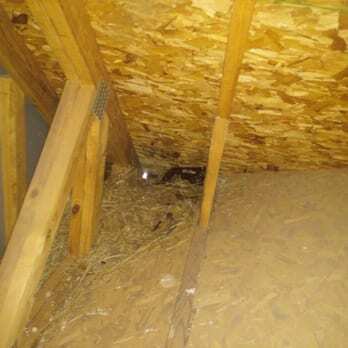
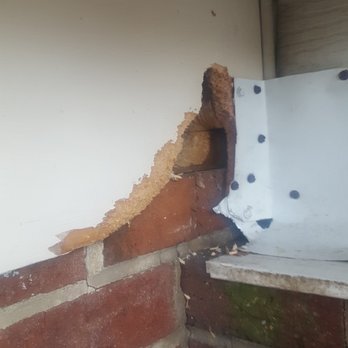
An adult raccoon weighs fifteen to twenty-five pounds and has hands. That combination is why raccoon damage is in a different category from every other animal we remove. They peel back roof shingles and pull off soffit panels, tear open gable vents, crush blown insulation flat across whole attic bays by walking it down, and rip ductwork apart for nesting space.
The part homeowners do not expect is the latrine. Raccoons return to one spot to defecate, and in an attic that means a concentrated pile that saturates insulation and eventually soaks into the drywall below as a brown ceiling stain and a smell that does not air out. Raccoon latrines can carry Baylisascaris procyonis, a roundworm whose eggs are hazardous to people — which is why cleanup is done in protective equipment, not with a shop vac on a Saturday.
How They Get In
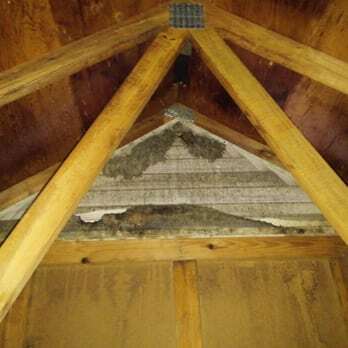
Raccoons rarely squeeze through an existing gap the way a squirrel does — they make their own opening. The usual points of attack are the gable vent (louvers pull out easily from a ladder or a nearby limb), the soffit where a panel can be levered down, the roof edge and ridge, the chimney — an uncapped flue is effectively a hollow tree to a female looking for a den — and occasionally straight through a rotted section of fascia or a plywood deck softened by a roof leak.
Underneath the house they use decks, sheds, stoops and crawl space vents. Any overhanging limb within about eight feet of the roofline is a bridge, and unsecured trash or pet food outside is the reason they were surveying your house in the first place.
Rabies, Relocation and Why We Do It This Way
The raccoon is a rabies vector species in Virginia. It is the clearest reason this is not a do-it-yourself job and not a job for a general pest company.
Spring is almost always a mother with kits. From March into early summer, a raccoon in an attic is overwhelmingly a female that has chosen your insulation as a nursery. The kits are immobile for weeks. Sealing the entry then means they die in the structure, so they are located and hand-removed — there is no shortcut around it.
How the Job Runs
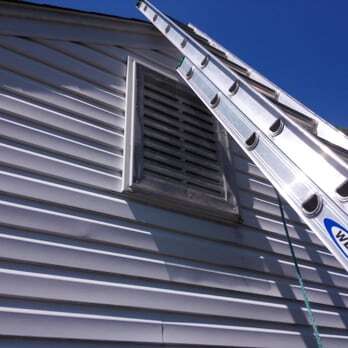
1. Inspection
Roofline, gable vents, soffits, chimney and crawl space, then into the attic to find the entry, the den, the latrine and the damage. You get photos.
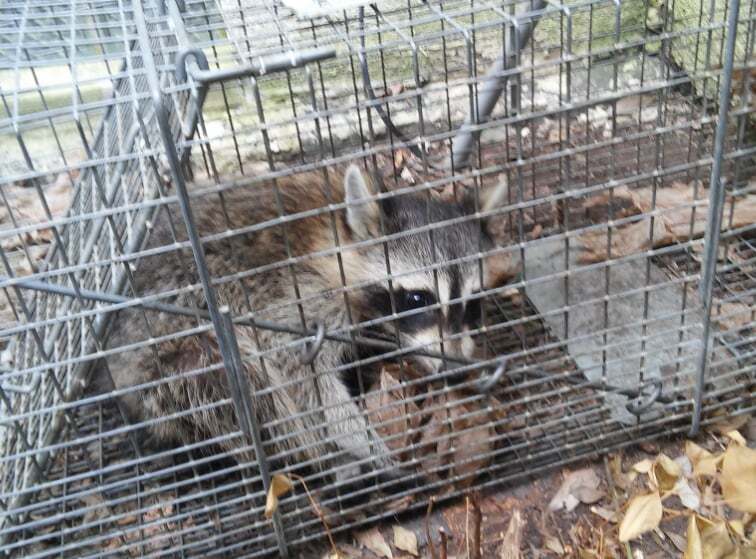
2. Humane removal
Species-appropriate trapping at the entry point, and hand-removal of kits when a litter is present. Handling and disposal follow Virginia’s rabies-vector rules.
3. Exclusion
Gable vents rebuilt in heavy-gauge steel, soffits re-secured, chimney capped, every opening closed in metal that a raccoon cannot lever or tear.
Why Homeowners Call BEDR
- 20+ years, family-owned — you deal with the people doing the work.
- Licensed in Virginia (#56104) and Maryland (#049372).
- Humane and legal methods — we work inside Virginia’s relocation and protected-species rules, not around them.
- We seal, not just trap — the reason customers do not call us back about the same animal.
- 24/7 answering, with same-day service across Northern Virginia.
- Full restoration in-house — attic cleanup, insulation, chimney caps, crawl space work.
Humane Solutions. Lasting Results.
Frequently Asked Questions
There is thumping in my attic at night. Raccoon or squirrel?
Time of day settles it. Raccoons are nocturnal and heavy — slow, deliberate thumps and sometimes vocal chittering. Squirrels are light and fast, and only at dawn and dusk.
Is a raccoon in my attic dangerous to my family?
Treat it seriously. Raccoons are a rabies vector species in Virginia, and the latrine can carry roundworm eggs that are hazardous to people. Keep children and pets out of the space and do not disturb the droppings.
Can you take it to the woods?
No, and neither can anyone else.
It is April and I think there are babies. What happens?
We locate and hand-remove the kits rather than sealing them in. That is both the humane route and the one that avoids dead animals in your ceiling. It is the most common spring call we run.
Who cleans the attic afterwards?
We do. Latrine removal, contaminated insulation, sanitizing, deodorizing and re-insulation are handled in-house, along with the structural repairs.
Get the Raccoon Out Before the Ceiling Goes
Raccoon damage compounds fast — insulation, ductwork, drywall and odor. We answer 24 hours a day and run same-day calls across Northern Virginia.
Other Wildlife Removal Services
Squirrel Removal · Bat Removal · Bird Nest Removal · Snake Removal · Groundhog Removal · Skunk Removal · Fox Removal · Opossum Removal · Mole Removal
Where We Work
Fairfax · Alexandria · Arlington · McLean · Vienna · Reston · Herndon · Falls Church · Woodbridge · Fredericksburg · Chantilly · Centreville · King George