
Wildlife Removal Services
Opossum Removal in Northern Virginia
Opossums get a worse reputation than they deserve. They are also genuinely inconvenient under a deck, in a crawl space or dead inside a wall — which is where most of our calls come from.
Licensed in VA (#56104) and MD (#049372). Family-owned, 20+ years, answering 24 hours a day.
Where They Get In and What They Actually Do
The Virginia opossum is a slow, solitary, nocturnal animal that does not dig its own burrow and does not chew its way into a house. It uses what is already open: the gap under a deck or shed, an inherited groundhog burrow, an open crawl space vent or door, a gap under an attached garage door, and occasionally an attic or soffit opening another animal made first.
Signs are heavy, slow movement after dark — dragging rather than scampering — hissing if cornered, large droppings, and a strong smell from the den area. Outside you will find raided bins, cleaned-out pet food bowls, and flattened low cover on the route in.
The damage is mostly mess rather than structure: soiled insulation and stored belongings, an unusable crawl space, conflict with dogs and cats, and a smell that will not clear. What they do not do is chew your wiring or tear open your roof — if that is happening, you have a squirrel or a raccoon as well.
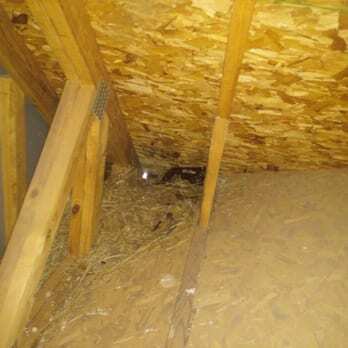
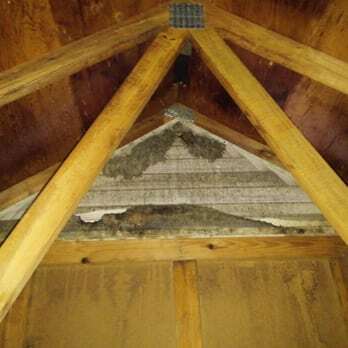
Dead Animal in the Wall: the Other Half of Our Opossum Calls
Opossums have short lives, and a fair number of our opossum jobs are carcass removal rather than live removal. The pattern is unmistakable: a smell that builds over several days, strongest in one room, then flies at the windows, then beetles. By the time the smell is obvious the animal is usually in an awkward place — a wall cavity, under a crawl space vapour barrier, beneath a deck or inside a soffit return.
That work is a trade skill rather than a cleanup: locating the carcass with as little demolition as possible, removing it and the material it has soaked, treating the cavity, and then finding the opening it used so the next one does not follow it in. Air fresheners and waiting it out do not work — the smell in a closed cavity lasts weeks, and the insects follow whatever is left.
And an opossum found dead in a wall almost always means the entry point is still open. Closing it is the part that stops this being an annual event.
Before You Panic: What Opossums Are Not
Two things are worth saying plainly, because they change how people react.
Opossums are extremely unlikely to carry rabies. Their body temperature is low enough that the virus does not establish well — which is why the opossum is not one of Virginia’s rabies vector species, unlike the raccoon, skunk, fox and bat. Hissing and drooling when cornered is a bluff display, not a sign of disease. And playing dead is an involuntary stress response: a ‘dead’ opossum on your patio has often just fainted.
They are useful animals. Opossums eat ticks, snails, carrion and rodents, and they are not territorial — the one under your deck is passing through a range, not colonising your property.
None of which makes one acceptable in your crawl space. Females also carry young in the pouch and on the back through spring and summer, so we check for dependent young before anything is closed.
How the Job Runs
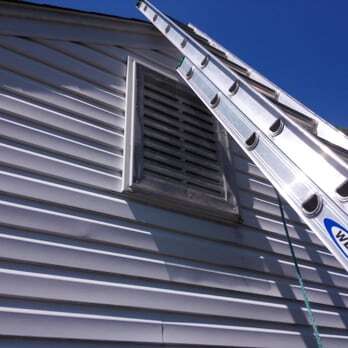
1. Find the way in
Deck and shed skirting, crawl space vents and doors, garage gaps, inherited burrows and any opening another animal opened first — plus a check for pouch young.
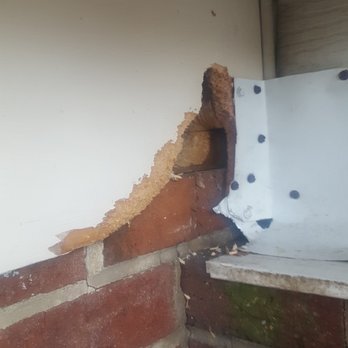
2. Remove or let it leave
One-way doors where the structure allows, trapping where it does not, and carcass location and removal where the call is a smell rather than a noise.
3. Close it properly
Galvanised mesh trenched in along deck and shed skirting, crawl space vents and doors made solid, garage gaps closed, soffit openings sealed in metal.
Why Homeowners Call BEDR
- 20+ years, family-owned — you deal with the people doing the work.
- Licensed in Virginia (#56104) and Maryland (#049372).
- Humane and legal methods — we work inside Virginia’s relocation and protected-species rules, not around them.
- We seal, not just trap — the reason customers do not call us back about the same animal.
- 24/7 answering, with same-day service across Northern Virginia.
- Full restoration in-house — attic cleanup, insulation, chimney caps, crawl space work.
Humane Solutions. Lasting Results.
Frequently Asked Questions
Are opossums dangerous to my pets?
Rarely. An opossum’s first response is to bluff — hiss, drool, show teeth — and then to play dead. Bites happen when a dog corners one. Keep pets away from the den entry and let us handle the removal.
Can opossums carry rabies?
It is very unlikely. Their low body temperature makes them poor hosts for the virus, and the opossum is not one of Virginia’s rabies vector species. Keeping pets vaccinated is still sensible, but an opossum in the yard is not a rabies emergency.
There is a terrible smell in my wall. Can you find it?
Yes — carcass location and removal is a regular part of our work. We locate it with as little cutting as possible, remove it and the soaked material, treat the cavity, and then close the opening it came in through.
Will it leave by itself?
Often, eventually — opossums are nomadic and not territorial. The problem is that the gap it used stays open, so the next one moves in, and sooner or later one dies under your house. Exclusion is what actually settles it.
Do you remove them from crawl spaces and under decks?
That is where most of them are. Crawl space work, trenched skirting barriers, cleanup and deodorising are all in-house.
Get It Out, Cleaned Up and Closed Off
Live removal, carcass removal, cleanup and exclusion. We answer 24 hours a day.
Other Wildlife Removal Services
Squirrel Removal · Raccoon Removal · Bat Removal · Bird Nest Removal · Snake Removal · Groundhog Removal · Skunk Removal · Fox Removal · Mole Removal
Where We Work
Fairfax · Alexandria · Arlington · McLean · Vienna · Reston · Herndon · Falls Church · Woodbridge · Fredericksburg · Chantilly · Centreville · King George