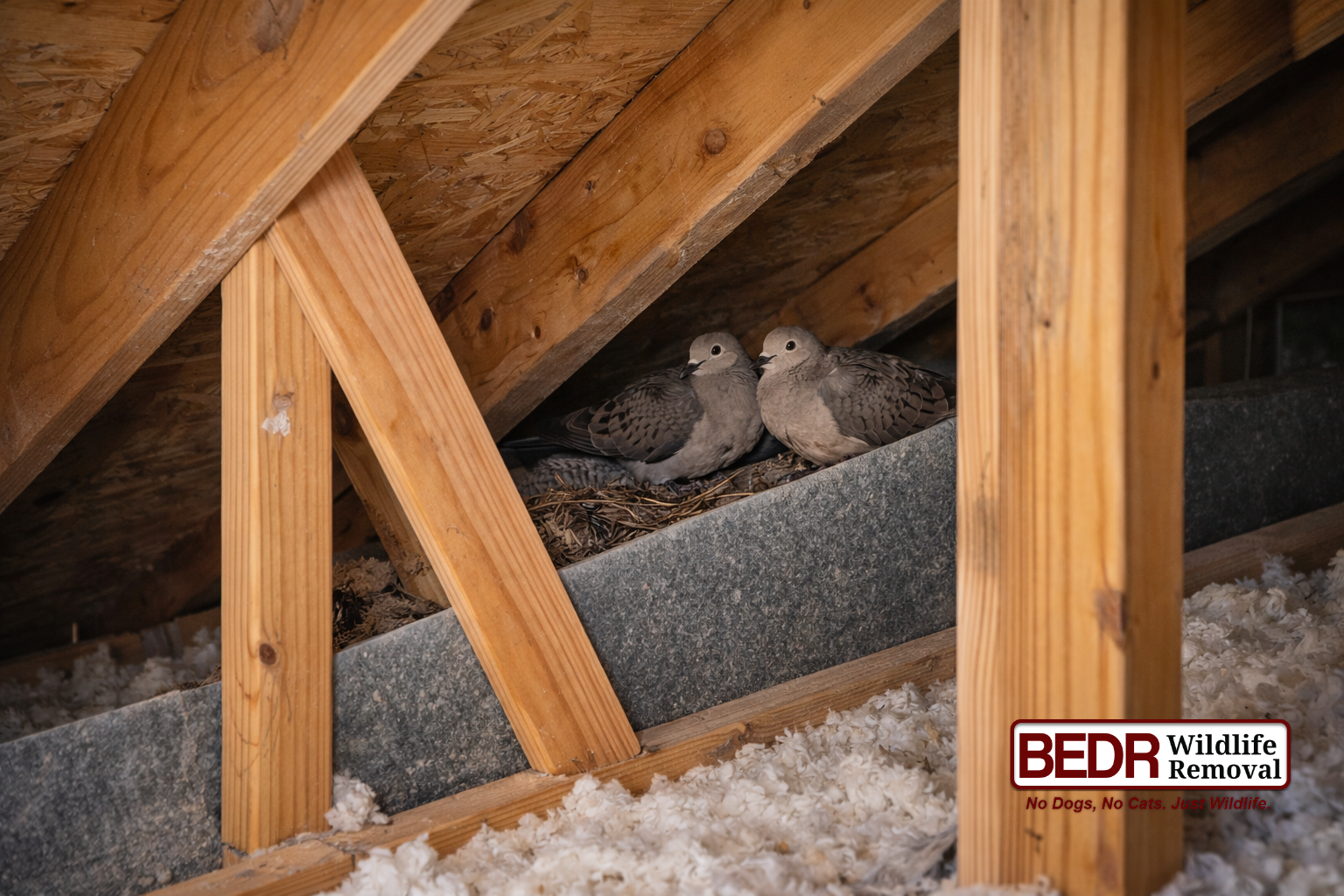
1. Attic (The #1 Hotspot)
The attic is, without question, the most common and problematic area of a home when it comes to bird intrusions. To a bird, your attic feels less like part of a house and more like a perfectly designed nesting sanctuary. It offers warmth during cooler months, stays dry during rain, and provides a quiet, undisturbed environment that is largely hidden from predators. Small openings around vents, rooflines, or soffits act like open invitations, allowing birds to enter and settle in without much resistance. Once inside, they often return repeatedly, turning a temporary visit into a long-term nesting situation.
What makes attic intrusions especially concerning is the level of damage birds can cause in a relatively short period of time. Birds will pull apart insulation to build their nests, which reduces your home’s energy efficiency and can lead to higher heating and cooling costs. Over time, droppings accumulate and create strong, unpleasant odors that can seep into living spaces below. These droppings may also carry bacteria, parasites, and allergens, affecting indoor air quality. Homeowners often first notice the problem through sounds—chirping, scratching, or flapping—especially in the early morning or evening hours.
Beyond the visible mess and noise, there are more serious risks that many homeowners don’t immediately consider. Nesting materials such as twigs, grass, and debris are often placed near wiring or recessed lighting, which can increase the risk of fire. In addition, blocked ventilation from nesting activity can trap heat and moisture, leading to further structural issues over time. As noted in your existing material, attic nesting frequently requires not just removal, but cleanup and restoration, which can become costly if the problem is not addressed early.
In short, what seems like a minor nuisance can quickly escalate into a larger issue affecting your home’s safety, cleanliness, and overall condition. That’s why early detection and proper removal are key.
2. Bathroom & Dryer Vents (Sneaky Entry Points)
Vents are one of the most common and overlooked entry points for birds, often acting as the “front door” into a home. From the outside, a vent provides everything a bird is naturally drawn to. Warm air flowing from bathroom or dryer vents signals a safe, temperature-controlled environment. The opening itself is typically just large enough for birds to enter, and the enclosed duct creates a tunnel-like space that feels secure and protected from predators. To a bird, this isn’t just an opening, it’s an ideal nesting site already built and ready to use.
Once inside, birds begin building nests using twigs, grass, insulation, and other debris. This is where the real problems begin. As nesting materials accumulate, they start to block airflow within the vent system. In a dryer vent, this restriction can prevent proper exhaust, causing heat and lint to build up, which significantly increases the risk of a fire. In bathroom vents, blocked airflow leads to trapped moisture, which can contribute to mold growth and long-term damage to walls and ceilings. What started as a small nest can quickly disrupt essential systems in the home.
Another issue is how quickly birds can return and reuse these spaces. If the vent is not properly sealed or protected after removal, it becomes a repeat nesting site season after season. Homeowners may find themselves dealing with the same problem multiple times, often with increasing damage each time. Over time, the combination of nesting debris, moisture, and restricted airflow can lead to costly repairs that go far beyond simple nest removal.
This is why vent-related bird intrusions are more than just a nuisance. They directly impact the safety and function of your home. Addressing the issue early, and more importantly, preventing access with proper vent covers or barriers, is key to avoiding ongoing problems.
3. Chimneys (Vertical Bird Traps)
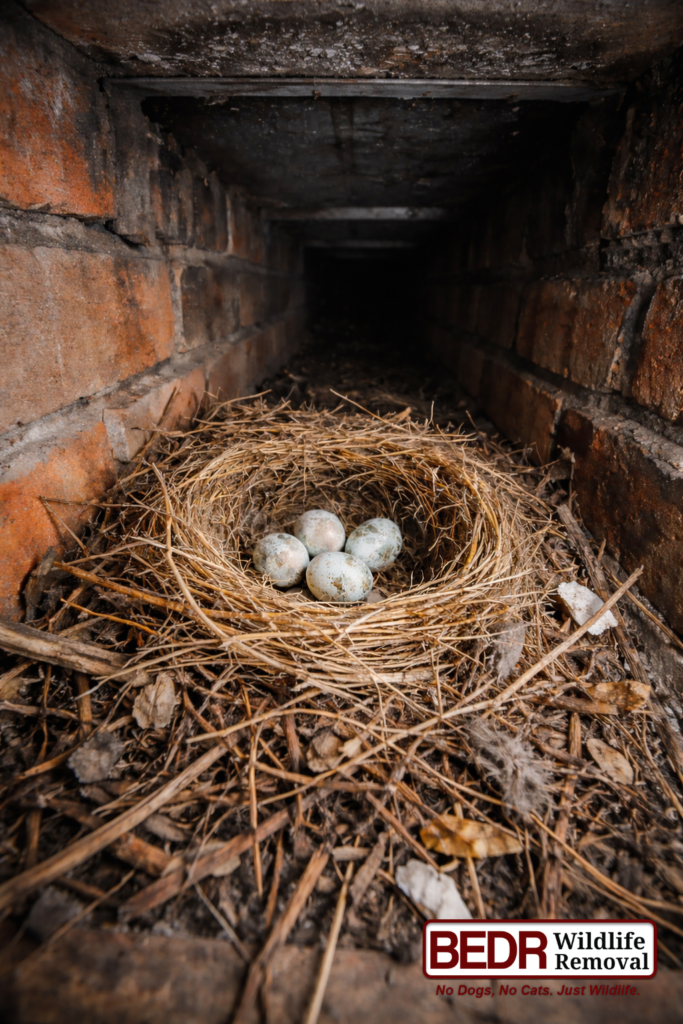
To a bird, your chimney doesn’t look like part of a home at all. It resembles something much more familiar… a hollow tree. That natural instinct draws birds straight down the flue, especially during nesting season when they’re searching for a safe, enclosed place to build. The vertical structure feels protected, the interior is shielded from weather, and without a proper chimney cap, it becomes an easy and inviting entry point.
Once inside, birds begin constructing nests using twigs, leaves, and other debris, often deep within the chimney. This is where the situation quickly becomes a problem for homeowners. As the nest grows, it can partially or completely block the flue, preventing smoke and gases from properly venting out of the home. When a fireplace is used under these conditions, smoke can back up into the living space, creating both a mess and a serious health hazard.
Another common issue is birds becoming trapped inside the chimney. Young birds, in particular, may fall below the nest and be unable to climb back up, leading to distressing noises as they attempt to escape. In some cases, birds may even find their way into the home through the fireplace, creating an unexpected and chaotic situation inside the living space. These scenarios can be stressful for homeowners and dangerous for the animals involved.
Over time, nesting materials and waste also begin to break down, producing strong, unpleasant odors that can travel through the chimney and into the home. Combined with the risk of blockage and animal entrapment, this makes chimney intrusions more than just an inconvenience. Installing a proper chimney cap and addressing any nesting activity early are the most effective ways to prevent these issues from developing into larger, more costly problems.
4. Soffits & Roofline Gaps (Hidden Entry Points)
Soffits and roofline gaps are some of the most overlooked problem areas when it comes to bird intrusions, largely because they aren’t easy to see from the ground. These areas run along the edges of your roof and are designed to help with ventilation, but when they become damaged or weakened, they quietly turn into entry points. Unlike vents or chimneys, there’s often no obvious sign of activity at first. No loud flapping, no visible nesting from the outside… just a small opening that birds quickly learn to take advantage of.
These issues usually start with normal wear and tear. Rotting wood, loose panels, or minor storm damage can create just enough of a gap for a bird to slip through. Once that happens, the structure itself can be easily widened by repeated entry and exit. Birds will peck, pull, and shift materials to make access easier, gradually turning a small vulnerability into a larger opening. Because this process happens out of sight, many homeowners don’t realize there’s a problem until the birds have already made their way deeper into the home.
And that’s where soffit and roofline intrusions become more serious. These areas often lead directly into the attic, giving birds full access to insulation, wiring, and open space for nesting. What began as a hidden entry point on the exterior can quickly turn into a full attic infestation. By the time sounds or odors become noticeable inside the home, the damage has often already been done.
This is why soffits and rooflines are often referred to as “quiet entry points.” They don’t announce themselves, but they play a major role in how birds get inside. Regular exterior inspections and timely repairs are key to catching these issues early and preventing birds from gaining access in the first place.
5. Kitchen & Range Hood Vents (Surprisingly Common)
Even areas inside the home that seem unlikely, like kitchen and range hood vents, can become a target for bird intrusions. From the outside, these vents release warm air and cooking odors, which naturally attract birds searching for a safe and active environment. To them, this steady airflow signals shelter, warmth, and a reliable place to build a nest. The exterior vent opening is often just large enough for small birds to enter, and once inside, the ductwork provides a protected pathway that feels secure and undisturbed.
As birds begin nesting in these vents, problems can develop quickly. Twigs, grass, and debris start to collect inside the duct, gradually restricting airflow. This can reduce the effectiveness of your kitchen ventilation, making it harder to remove smoke, moisture, and odors while cooking. Over time, the blockage can become severe enough to affect appliance performance and indoor air quality, creating an uncomfortable and potentially unhealthy environment inside the home.
One of the more serious concerns is the increased risk of fire. Nesting materials are dry and highly flammable, and when combined with heat from cooking exhaust, the conditions can become dangerous. The buildup of debris inside a confined vent space creates the potential for ignition, especially if airflow is already restricted. This is not just a maintenance issue, but a safety concern that should not be ignored.
Because these vents are used frequently, bird activity may go unnoticed until airflow is significantly reduced or odors begin to linger longer than usual. By that point, the nesting materials may already be well established. Preventing access with proper vent covers and addressing any early signs of intrusion can help avoid more serious problems and keep your home’s ventilation system working as it should.
Why These Areas Matter
Bird nests aren’t just an inconvenience or a minor annoyance tucked away out of sight. Over time, they can create real and measurable problems inside a home. What starts as a small collection of twigs and debris can quickly turn into a source of contamination, damage, and safety concerns that many homeowners don’t realize until the issue has grown. Birds naturally bring in nesting materials like grass, feathers, and debris, but they also leave behind droppings and organic waste that can carry bacteria, parasites, and allergens. As this builds up, it can begin to affect the air quality inside the home, especially when nests are located in attics, vents, or other areas connected to airflow.
Beyond health concerns, bird nesting activity can lead to physical damage throughout the structure of the home. Insulation is often torn apart and displaced, vents can become clogged, and wood or soffit materials may be weakened from repeated use and moisture exposure. These issues don’t just impact comfort; they can lead to higher energy costs, reduced efficiency in ventilation systems, and the need for more extensive repairs if left unaddressed. In many cases, homeowners don’t notice the full extent of the damage until a professional inspection is completed.
There are also safety risks that come with bird intrusions, particularly when nests are built near electrical components or inside ventilation systems. Dry nesting materials are highly flammable, and when combined with heat from wiring, lighting, or restricted airflow, the risk of fire increases. Blocked vents can also trap heat and moisture, adding strain to HVAC systems and creating conditions that allow further damage to develop over time. As highlighted in your existing material, bird nests can lead to blocked systems, structural damage, and serious health concerns when not handled properly.
Because these problems tend to grow quietly behind walls, ceilings, and rooflines, early detection and professional removal are key to protecting your home. Addressing the issue promptly not only prevents further damage but also helps avoid more costly repairs down the line.
If you’re hearing noises, noticing odors, or suspect birds may be nesting in your home, it’s time to take action. BEDR Wildlife Removal provides professional bird nest removal and prevention services throughout Northern Virginia. Call 540-307-2566 today to speak with a wildlife specialist or request an inspection. Taking care of the problem now can save you time, money, and stress later.

#FairfaxVA #ArlingtonVA #AlexandriaVA #McLeanVA #FallsChurchVA #NorthernVirginia #WildlifeRemoval #BEDRWildlifeRemoval